
PP pleated filter cartridge is an important component of many liquid or gas filtration systems, playing a critical role in industries ranging from seawater desalination plants, oil and gas to food and beverage production. Understanding how to evaluate and ensure the quality of PP pleated filter cartridges is crucial for maintaining filtration system efficiency and preventing contamination. Today, we will gradually guide you in evaluating the quality of PP pleated filter cartridges and finding the highest quality filter cartridges for your project.
What is PP pleated filter cartridge?
The PP pleated filter cartridge is entirely made of polypropylene, and its pleated design increases the filtration area. This design ensures high flow rate and low pressure drop, enabling it to effectively remove particles ranging from 0.2 to 100 microns. It is particularly suitable for applications that require high-purity and sterile water filtration.
PP pleated filter cartridge adopts a multi-layer polypropylene material structure and is made by hot melt welding technology. It has a wide range of chemical compatibility and can withstand various acidic and alkaline environments. The effective filtration area of this type of filter is usually very large, for example, the filtration area of a 10 inch filter can reach more than 0.7 square meters, which means that it can provide higher pollutant holding capacity and longer service life under the same size.

Why is the quality of PP pleated filter so important?
Firstly, it directly affects the filtration efficiency. High quality filter cartridges can effectively remove particles and pollutants from fluids, ensuring the purity of the final product. In industries such as pharmaceuticals, food and beverage, this is related to the safety and quality of the final product. Secondly, high-quality filter cartridges can protect downstream sensitive equipment, extend the service life of the system, and in the long run, be more economical.
How to judge the quality of PP pleated filter cartridge?
1. Visual inspection
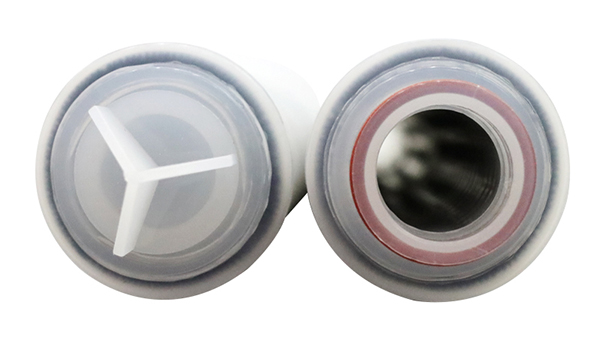
Physical examination is a fundamental and crucial step. Check for obvious defects such as tearing, holes, or deformation in the folds. Ensure that the spacing between folds is uniform and not flattened or damaged, as this can affect the filtering effect. At the same time, check whether the end cap, center core, and wrinkles are firmly bonded and aligned correctly. Poor assembly may cause unfiltered fluid to bypass the filter element.
2. Size verification
The accuracy of size is directly related to the matching between the filter element and the filtration system. Measure the length, diameter, and core diameter of the filter element to ensure compliance with the specifications of the filtration system. Inappropriate size can lead to inadequate sealing, which may result in unfiltered fluid leakage. The standard PP pleated filter cartridge has an outer diameter of 68 millimeters and an inner diameter of 30-32 millimeters, with various lengths including 5 inches, 10 inches, 20 inches, 30 inches, and 40 inches.
3. Weight and tightness assessment
Weight is a preliminary reference for determining the quality of filter cartridges. High quality filter cartridges have a high fiber density and a heavy hand feel. Weigh the filter element by hand, heavier ones usually indicate higher fiber density and better quality. At the same time, the tightness of the filter element can be judged by its hand feel: the firmer the hand feel, the better the compression performance, and the better the filtering effect. The surface of the inferior filter element is rough, and there may be fractures when squeezing the filter element mouth.
4. Material inspection
The regular filter element is made of food grade materials, with a white and uniform color and a smooth surface. Poor quality filter cartridges have a yellowish color, poor texture, and rough texture. When selecting filter cartridges, attention should be paid to the material. Regular filter cartridges should have consistent filter paper colors and smooth surfaces. For high-end applications such as the food and pharmaceutical industries, it is also necessary to confirm whether the filter element meets relevant hygiene standards to ensure that no harmful substances are released.
What material will affect the filtration efficiency of the PP pleated filter cartridge?
The structural design of filter material plays a decisive role in the filtration performance. The high-quality PP pleated filter mainly uses multi-layer polypropylene film as the filtration medium, forming a gradient filtration structure. This design achieves a stable deep filtration effect, unaffected by fluctuations in feed pressure, ensuring stable filtration accuracy. The nominal filtration accuracy range of this type of filter cartridge is wide, from 0.1 μ m to 60 μ m, which can meet different application requirements.
Chemical compatibility is also a key factor. High quality PP pleated filter cartridge has good chemical resistance and can adapt to various acidic and alkaline environments. The sealing material of the filter element is equally important. High quality products usually use high-quality sealing components such as silicone rubber, EPDM rubber, and fluororubber to ensure compatibility with various filter media. When selecting, the chemical compatibility of the filter material should be confirmed based on the actual characteristics of the filter medium to avoid contamination caused by material degradation.
The quality of hot melt welding technology is directly related to the structural integrity and service life of the filter element. The high-end PP pleated filter element adopts hot melt welding technology to ensure that the filter element will not crack or deform in high temperature and high pressure environments. This manufacturing method avoids the potential contamination issues caused by adhesives and is particularly suitable for industries such as food and pharmaceuticals that require extremely high purity.
Material purity is particularly important for sensitive applications. The high-quality PP pleated filter element is made of 100% polypropylene material, without adhesives or other additives, avoiding secondary pollution during the filtration process. For fields such as healthcare and biopharmaceuticals, attention should also be paid to the endotoxin content of filter cartridges. The endotoxin level of high-quality products is usually controlled within ≤ 0.25EU/ml.

How to verify the filtration performance of the filter cartridge?
Performance testing is a crucial step in verifying the filtering effectiveness of the filter element. Pressure drop testing is used to measure the resistance or pressure loss of a fluid passing through a filter element. High quality PP pleated filter cartridges usually have a low pressure difference, with a continuous working pressure of up to 0.42Mpa (25 ° C) and a back pressure difference of 0.40Mpa (25 ° C). Excessive pressure drop may indicate that the filter medium is too dense or has structural defects.
Efficiency testing determines filtration efficiency by evaluating the retention capacity of the filter element for specific particle sizes. The retention rate of high-quality PP pleated filter cartridge can reach 100%, and the bubble point test value meets the standard (for example, the bubble point pressure of 0.45 μ m filter cartridge is ≥ 0.18Mpa). This is particularly important for applications that require strict purity, especially in high-precision fields such as microelectronics and pharmaceuticals.
Integrity testing is an important method for verifying the performance of filter cartridges. The bubble point test determines the maximum pore size of the filter medium by measuring the pressure of continuous bubbles emerging from the wet filter. Diffusion flow testing is another integrity testing method, and the qualification criteria are usually bubble point pressure ≥ 0.08MPa and isopropanol permeation rate ≤ 5.5ml/min (isopropanol: water=60:40, 0.1MPa pressure difference). These tests are crucial for confirming the integrity of the membrane filter, ensuring that the filter cartridge is defect free during the production process.
Flow testing is the process of measuring the flow rate of a filter at a specified pressure to ensure that it meets the operational requirements of the system. The water flow parameters of high-quality PP pleated filter cartridges are usually high, for example, a 10 inch filter cartridge with a precision of 0.45 μ m can achieve a flow rate of 7.23 L/min (pressure difference=0.01 MPa). Flux is an important indicator for measuring the performance of filter cartridges, and a higher flux means that more fluid can be processed under the same pressure, thereby improving filtration efficiency.
Comparison of Performance Parameters of PP pleated Filter Cartridge with Different Precision
| Filtration accuracy (μ m) | Water flow rate (L/min, pressure difference=0.01MPa) | Bubble point pressure (MPa) | Main application areas |
|---|---|---|---|
| 0.10 | 6.89 | ≥ 0.21 | Electronics industry high-purity water, pharmaceutical sterilization |
| 0.22 | 6.89 | ≥ 0.21 | Fine chemicals, biologics |
| 0.45 | 7.23 | ≥ 0.18 | Food and beverage, conventional liquid filtration |
| 1.00 | 7.5-8.0 | ≥ 0.15 | Pre treatment, removal of large particles |
| 5.00 | Above 8.0 | ≥ 0.10 | Coarse filtration, high solid content fluid |
What should be noted when choosing a supplier?
The reputation and experience of suppliers are the primary considerations when selecting qualified suppliers. Priority should be given to manufacturers specializing in filter cartridge production, as these brands typically have a richer accumulation of processes. It is possible to examine the service experience of enterprises in the industry, as there are differences in supply demands between food and chemical factories, and manufacturers with corresponding industry service experience are better able to understand the needs of specific scenarios.
Quality assurance and compliance are the foundation for ensuring stable quality of filter cartridges. Suppliers with relevant certifications (such as ISO 9001 quality management system) should be sought, and material certifications or technical information provided by manufacturers should be reviewed to ensure compliance with NSF, FDA, or other industry standards related to the application. Legitimate brands will proactively provide material certification to clarify the compliance of polypropylene raw materials.
The variety of products and customization capabilities reflect the technical strength of the supplier. A reliable supplier should be able to provide filter cartridges of various materials, different accuracies, and sizes to meet the filtration needs of multiple industries such as food, medicine, and electronics. Manufacturers with customization capabilities have greater cooperation value, as they can adjust filter specifications based on equipment size or optimize precision parameters according to filtration requirements.
Technical support and customer service are important guarantees for long-term cooperation. Suppliers should be selected to provide high-quality technical support and quick response customer service, including product selection, troubleshooting, and other consulting services. Before placing a large order, it is essential to request samples for testing. After verifying the actual filtration effect and installation compatibility, a final decision can be made.
The reliability of the supply chain is directly related to the continuity of production. Evaluating the reliability of suppliers’ supply chains and selecting manufacturers with independent production lines that can ensure stable supply can effectively reduce supply chain risks during cooperation. Reliable suppliers have efficient delivery systems and scientific inventory management, which can respond to your needs in a timely manner and avoid production interruptions.
Conclusion
High quality PP pleated filter cartridge is the core of the filtration system, and its quality directly affects the performance of the entire system and the quality of the final product. Through visual inspection, material evaluation, performance testing, and supplier screening of the system, it can be ensured that the selected filter element meets practical application requirements. Investing in high-quality filters is an important measure to ensure operational safety and efficiency. In the long run, this investment will bring more stable performance, longer service life, and lower maintenance costs. With the comprehensive guide provided in this article, you will be able to select the most suitable PP folding filter element, thereby improving the overall performance of the filtration system.
Get A Quote Today!