
In petrochemical production, pipeline filters play a critical role in ensuring the safe and stable operation of equipment. They effectively separate solid impurities from gas-liquid phase materials, preventing damage or blockage to equipment and piping components. Selecting the appropriate filter not only impacts production efficiency but directly influences the safety and economic viability of the entire system. This article comprehensively analyzes the key selection criteria for pipeline filters to help you make optimal decisions.
Why Must Filters Be Installed in Pipeline Filter?
Installing pipeline filter is a critical measure for ensuring production safety and maintaining stable equipment operation. These devices effectively remove solid particulate contaminants from fluids, preventing their entry into downstream equipment and avoiding damage or blockage to precision components like pumps, compressors, valves, and instruments. By ensuring material purity, filters not only reduce unplanned downtime but also enhance product quality and production efficiency, serving as the “guardian” throughout the entire process system.
What are the types of industrial pipeline filters?
Industrial pipeline filters are primarily categorized by structure into Y-strainers, T-strainers, and basket filters. Additionally, based on filtration principles, they can be classified as mechanical filters, magnetic filters, and plasma filters, among others. Each type possesses distinct characteristics: Y-strainers offer excellent high-pressure resistance and can be installed horizontally or vertically; T-type filters feature a large vertical filtration chamber, making them less prone to complete blockage; basket filters allow for the removal of pipeline debris without shutting down the system.
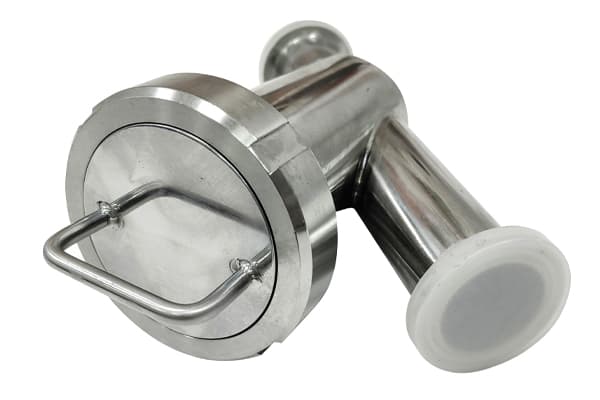
Comparison of Filter Types and Characteristics
| Filter Type | Structural Features | Applications | Advantages |
|---|---|---|---|
| Y-Type Filter | | Y-shaped design, available in cast or welded versions | Steam, gas, liquid, and other media | High-pressure resistance, compact structure, flexible installation |
| T-Type Filter | T-shaped design, available in straight-through or baffled configurations | High-flow applications with large particulate impurities | Large filtration area, low clogging risk, minimal pressure drop |
| Basket Filter | Basket-style construction, including straight-through or high-inlet/low-outlet variants | High-viscosity media with high impurity content | Extensive filtration area, cleanable without shutdown |
| Backwash Filter | Features automatic backwashing mechanism | Suitable for continuous production with minimal downtime | Automatic cleaning, low maintenance costs |
What are the characteristics and applications of Y-type filters?
Y-type filters derive their name from their Y-shaped configuration, manufactured via casting or welding processes. Key features include high-pressure resistance and flexible installation—suitable for horizontal or vertical mounting (vertical only when fluid flows downward). Typically installed upstream of pressure-reducing valves, relief valves, level control valves, or other equipment, they remove impurities to protect valves and machinery. Their advanced design minimizes flow resistance and facilitates easy drainage.

What unique advantages does the T-type filter offer compared to other types?
The T-type filter features a T-shaped configuration and comes in three structural variants: forward flow, reverse flow, and straight flow. Its most significant characteristic is the large vertical filtration chamber, which prevents complete blockage by pipeline impurities and minimizes filtration pressure drop. Internal filter elements typically use SS316L stainless steel for superior corrosion resistance and extended service life. Filter mesh densities range from 10 to 120 mesh, with operating temperatures from 0 to 450°C, customizable to user requirements.

What special operating conditions are basket strainers suitable for?
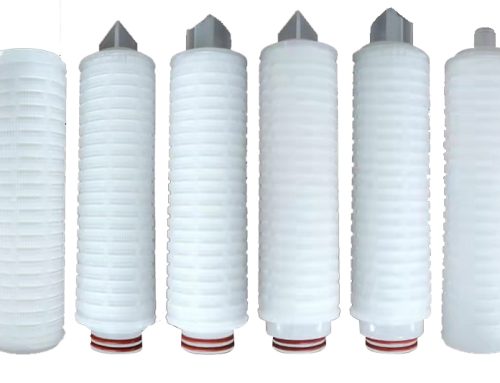
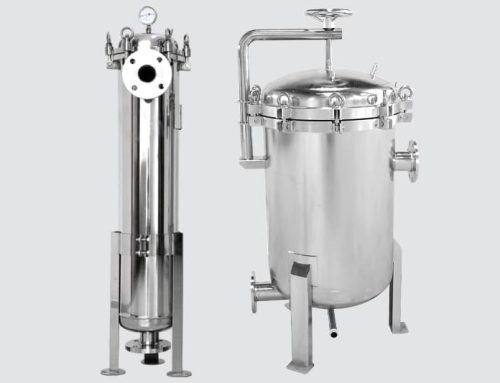
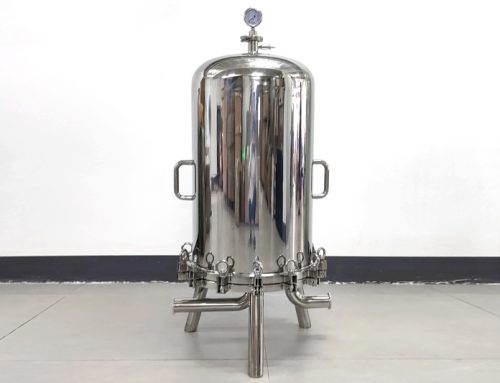
Basket filters are available in dual-cartridge and multi-cartridge configurations, serving as compact equipment specifically designed to remove small quantities of solid particles from liquids. They are primarily suited for media with high solid impurity content and high viscosity. A key advantage of basket filters is their ability to remove filtered debris from pipelines without shutting down operations, which is particularly crucial for continuous production processes. Consequently, basket filters are widely adopted across multiple industrial sectors including petroleum, chemical, synthetic fiber, pharmaceutical, and food processing.

How to determine filter type based on pipeline dimensions?
Pipeline dimensions serve as a key basis for filter selection. Generally:
- When DN ≤ 100mm, Y-strainers are recommended
- For 100mm<DN≤350mm, a T-strainer is recommended
- For DN≥400mm, a basket strainer is recommended
Additionally, cone strainers are suitable for temporary filtration installed on pump inlet pipelines. The inlet and outlet diameters of pipeline filters should not be smaller than the diameter of the filtered pipeline and are typically consistent with it.
What factors should be considered when selecting filter materials?
Filter material selection requires comprehensive consideration of factors such as medium properties, operating pressure, and temperature conditions. Filter cartridge materials are generally stainless steel, while the housing material typically matches the connected pipeline material. The selection must meet the requirements of the conveyed medium’s properties and pipeline operating conditions. For different service conditions, filters made of cast iron, carbon steel, low-alloy steel, or stainless steel may be considered. For flammable, explosive, or toxic media, butt-welded filters are recommended. When the diameter is less than DN40, socket-welded filters are preferable.
How to Determine the Appropriate Mesh Count?
The selection of mesh count primarily depends on the particle size of impurities requiring interception and the maximum particle size tolerable by downstream protected equipment. Larger impurity particle sizes necessitate finer mesh counts. Refer to specialized mesh specification tables for particle sizes interceptable by different mesh grades. Generally, filter mesh selection hinges on the target particle size, with mesh count chosen based on both the required particle size and process requirements of the fluid flow.
How to handle filtration for media with special properties?
For media with special properties, specific filtration solutions are required:
- Media with high pour points and high viscosity, or media containing significant suspended solids that require frequent purging during stagnation, should use horizontally mounted backwash filters.
- For flammable, explosive, or toxic media, use butt-welded filters. For diameters below DN40, socket-welded filters are recommended.
- Where media flow changes direction by 90 degrees, use baffle-type T-filters.

What are the key considerations for filter installation?
Filter installation quality directly impacts performance:
- Installation direction must align with design flow direction, ensuring pipeline flow matches the filter’s flow arrow
- Install in easily accessible locations for operation and maintenance. Typically mount on horizontal pipelines with sufficient clearance
- For larger filters, consider bottom support structure installation
- Install pressure gauges or differential pressure transmitters upstream and downstream as needed to detect filter clogging
- Install isolation valves before and after the filter to disconnect it from upstream/downstream systems during maintenance
How to Enhance Filtration Efficiency and Lifespan Through Maintenance Management?
Effective maintenance management significantly improves filter performance and longevity:
- Regularly monitor filter clogging through differential pressure tracking
- For filters with reusable baskets or screens, perform periodic backwashing to remove accumulated contaminants and extend element lifespan
- When handling fluids with high sludge or solids content, increase cleaning frequency to maintain consistent flow rates
- Opting for cleanable filter cartridges or reusable cartridges reduces long-term operational costs
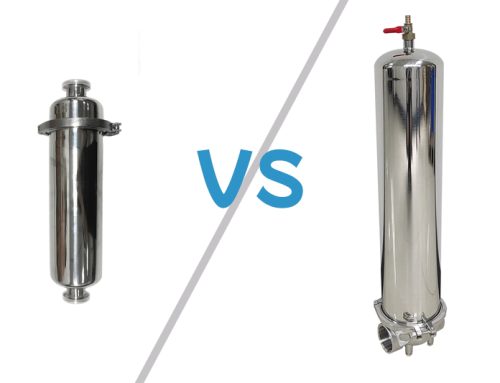
Key Differences and Selection Criteria Between Filtration Systems and In-Line Filters?
The primary distinctions between filtration systems and in-line filters lie in filtration precision, equipment size, and manufacturing requirements:
- In-line filters offer advantages such as simple structure, low manufacturing costs, and compact size, but suffer from issues like low filtration precision and limited filtration area
- Filtration systems provide more efficient solutions through their large filtration area and settling time, high filtration precision and structural strength, extended service life, and features like online cartridge flushing and replacement
- While filtration systems entail higher manufacturing costs, they must be selected safely, economically, and appropriately based on application scenarios, physical properties of the medium, and process requirements
How to Develop Filtration Solutions for Complex Application Environments?
When addressing complex application environments, developing filtration solutions requires comprehensive consideration of multiple factors:
- Seek expert advice when handling special fluids or complex systems to ensure optimal filtration solutions
- Implement customized solutions based on medium properties, operating conditions, and process requirements
- Balance considerations for future maintenance and operational costs
- For exceptionally demanding conditions, consider multi-stage filtration approaches combining different filter types to achieve optimal performance
Conclusion
Selecting the appropriate pipeline filter requires comprehensive consideration of multiple aspects, including medium characteristics, operating conditions, pipeline parameters, and economic factors. Proper selection not only effectively protects downstream equipment but also enhances the overall operational efficiency and reliability of the system. For complex applications, consulting professional engineers or filtration specialists is recommended to obtain the most suitable pipeline filtration solution.
Get A Quote Today!