

PTFE Pleated Filter Cartridge SOE DOE 10 20 30 40 Inch
√ Resists corrosion from strong acids, bases;
√ Performs at high temperatures above 200°C;
√ Available in both hydrophobic and hydrophilic;
√ Using hot-melt welding technology, without adhesives;
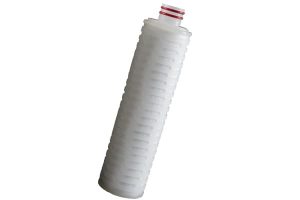
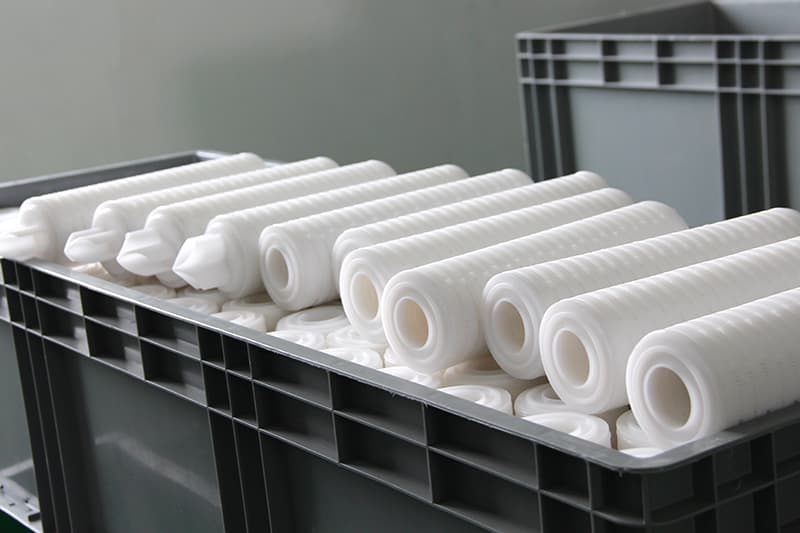
PTFE pleated filter cartridge, also known as polytetrafluoroethylene folding filter element, is a multifunctional filter element made by folding PTFE microporous membrane through a special process. It is mainly divided into two categories: hydrophobic and hydrophilic, with excellent chemical compatibility, high and low temperature resistance, high throughput, and long lifespan. It is widely used in applications with strict filtration conditions.
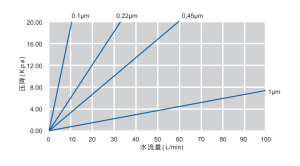
| Filtration accuracy: | 0.1μm, 0.22μm, 0.45μm, 1.0μm, 3.0μm, 5.0μm, etc. |
|---|---|
| Lengths: | 5 inches, 10 inches, 20 inches, 30 inches, 40 inches, etc. |
| Outer Diameter: | Outer Diameter: Common diameters are 68mm and 69mm, with larger flow sizes such as 83mm and 130mm |
| Connection Type: | 215, 220, 222, 226, and M20 etc. |
| Operating Temperature: | Typically ≤80°C (liquid), high-temperature models can reach over 90°C. |
| Operating Pressure Differential: | typically 0.42MPa @ 25°C. |
Get Quote Today!
Leading PTFE Pleated Filter Cartridge Manufacturer
Lvyuan is a professional manufacturer of PTFE (polytetrafluoroethylene) pleated filter cartridges and provides comprehensive customized services.
We uses PTFE microporous membrane, which has excellent chemical compatibility, can withstand strong acids, strong bases, and various organic solvents, and has strong hydrophobicity and high temperature resistance, supporting repeated steam sterilization.The filter element adopts hot melt welding technology without adhesive, ensuring a clean and safe filtration process.
Lvyuan can customize different filtration accuracies (such as 0.1 μ m to tens of micrometers), filter cartridge lengths (such as 5 inches to 40 inches), and interface forms (such as 222, 226, etc.) according to customer needs. Widely used in precision filtration in industries such as pharmaceuticals, food and beverage, electronics, and chemical engineering.

Features of PTFE pleated filter cartridge:
The excellence of PTFE filter lies in its material and structure. When choosing, the first thing to clarify is whether the filtering object is liquid or gas.
| Characteristics | Hydrophobic PTFE Filter | Hydrophilic PTFE Filter |
|---|---|---|
| Key Characteristics | Natural strong hydrophobicity, capable of 100% filtration of bacteriophages and bacteria in gases, suitable for humid or dry environments. | Stable hydrophilicity can be obtained through modification, without the need for pre wetting during use, and polar solutions (such as aqueous solutions, strong acid and alkali solutions) can be directly filtered. |
| Chemical resistance | Resistant to strong acids, bases, oxidants, and organic solvents, with a wide range of chemical compatibility (pH values 1-14). | Resistant to strong acids, strong alkalis, and strong oxidants, with wide chemical compatibility. |
| Heat resistance | The working temperature can reach 250 ℃ and can withstand repeated steam sterilization at 121 ℃ -142 ℃. | Has good heat resistance. |
| Main applications | Gas filtration : Compressed air sterilization, fermentation tank breathing port, high-purity gas; **Liquid filtration: low surface tension solvents and chemical reagents. | Liquid filtration: Strong corrosive liquids, high-purity chemicals, medicinal solutions (such as antibiotics, eye drops), food and beverage products (such as wine, mineral water). |
How is structure and process for PTFE pleated filter cartridges?
A high-quality PTFE pleated filter cartridge typically uses the following structure and process to ensure its performance:
Structural material: The filtering layer is a PTFE microporous membrane; The diversion support layer is mostly made of polypropylene (PP) non-woven fabric or wire mesh; The shell, center rod, and end cap are commonly made of polypropylene (PP) or other high-performance plastics; The sealing ring material can be selected from silicone, fluororubber, etc.
Manufacturing process: Using hot melt welding technology for sealing, ensuring no adhesive, no detachment, and preventing secondary pollution. -Quality Assurance: Before leaving the factory, it is usually subjected to integrity testing (such as bubble point testing) and rinsed with pure or ultrapure water to meet the cleanliness requirements of different industries.

What are the advantage of PTFE pleated filter cartridge?
- Excellent chemical compatibility: Resistant to strong acids, strong bases, and organic solvents, suitable for a wide pH range of 1-14
Excellent temperature resistance: Hydrophobic filter cartridges can withstand temperatures ranging from -200 ℃ to 260 ℃ for a long time, while hydrophilic filters are typically suitable for liquids below 80 ℃; Can withstand repeated steam sterilization (such as 121 ℃) - Special surface characteristics: Hydrophobic type: Natural water repellent, suitable for sterilizing gases and organic solvents
- Hydrophilic type: After modification, it can quickly infiltrate and filter the aqueous solution directly without pre wetting
High filtration efficiency and high throughput: The membrane pores are evenly distributed and can efficiently intercept particles and bacteria (such as a 0.22 μ m pore size that can reach sterilization level); Folding design provides a large filtering area, achieving high flow rate and long lifespan
What are the application of PTFE pleated filter cartridge?
- Filter corrosive chemicals (such as etching solutions, strong oxidants), purify organic solvents
- High temperature process fluid filtration, reaction tank exhaust, pharmaceutical production line requiring online steam sterilization
- Hydrophobic type: Compressed air/nitrogen sterilization, fermentation tank respirator
- Hydrophilic type: Liquid medicine (antibiotics, eye drops), strong acid and alkali solutions, high-purity electronic chemical filtration
- Terminal sterilization filtration, purification of high-purity reagents and photoresist, filtration of high flow chemicals (such as wet process for LCD panels)
How to test the filtration efficiency of PTFE pleated filter cartridge?
There are various methods for testing the filtration efficiency of PTFE pleatd filter cartridges, and the core is to evaluate their ability to retain impurities directly or indirectly. The following are several main testing methods:
🔬 Direct efficiency testing method
The direct efficiency testing method evaluates the performance of the filter by introducing a challenge and directly measuring its retention effect.
Particle counting method: This is a commonly used method for evaluating filtration efficiency, especially the performance of sterilization grade filter cartridges. This method uses a particle counter to directly measure the quantity and concentration of specific particle size particles in the air upstream and downstream of the filter element, and calculates the counting and filtering efficiency of the filter element by comparing them. This method has high accuracy and can measure particles of different particle size ranges to comprehensively evaluate the filtration performance of the filter cartridge.
Bacterial Challenge Test: This method uses microorganisms of a specific size (such as common defective short wave bacteria) to prepare a bacterial solution, passes it through a filter cartridge, and then cultivates and checks whether the downstream filtrate is sterile. This is a method for directly verifying the absolute microbial retention ability of filter cartridges, and is the gold standard for verifying sterilization grade filter cartridges.
Weighing method and colorimetric method: These are more traditional testing methods. The weighing method calculates efficiency by measuring the mass of dust captured by the filter element, mainly for dust particles ≥ 5 μ m. The colorimetric method calculates efficiency by comparing the changes in transmittance of filter paper before and after the filter element, mainly for particles ≥ 1 μ m. These methods still have applications in specific industrial fields.
⚖️ Indirect integrity testing
Indirect integrity testing indirectly reflects the integrity and maximum pore size of the filter element through physical parameters, thereby ensuring its filtration efficiency. This type of method is fast, non-destructive, and commonly used for factory inspection and rapid on-site inspection.
Bubble point test: This is a widely used integrity testing method. The principle is that when the filter membrane is completely immersed in liquid, gas is pressurized from one side to overcome the surface tension of the liquid and escape from the largest pore of the membrane. The pressure at which the first continuous bubble is generated is called the “bubble point”. This pressure value is directly related to the maximum pore size of the filter membrane. The higher the pressure, the smaller the pore size and the better the retention ability of the filter element. By monitoring the bubble point pressure, the integrity of the filter element can be indirectly verified.
Water intrusion method: This method is specifically designed to test hydrophobic PTFE filters. Due to the hydrophobic membrane’s resistance to water, the smaller the pore size, the greater the pressure required to squeeze water into the membrane pores. The water intrusion method measures the flow rate of water squeezed into the filter membrane under a certain pressure, and determines the pore size and integrity of the filter element based on the flow rate.
💎 Selection of testing methods
The choice of testing method mainly depends on the application scenario and verification purpose of the filter element:
Research and performance validation: Particle counting or bacterial challenge testing is commonly used to obtain direct and quantitative efficiency data.
Production quality control and on-site rapid inspection: Bubble point testing or water intrusion method are often used because they are fast, non-destructive, and can effectively ensure the integrity and reliability of each filter element.
How to choose PTFE pleated filter cartridge for your need?
You can make the final decision based on the following key points:
- Clarify the filtering medium: This is the most basic step. Filter gases or low surface tension liquids (such as organic solvents) and choose hydrophobic type; Select hydrophilic type for filtering aqueous solutions and strong acid and alkali solutions.
- Confirm key parameters: Determine the required filtration accuracy , working temperature/pressure , and size and interface of the filter element according to the process requirements.
- Pay attention to industry standards: For high-purity applications such as pharmaceuticals and electronics, it is necessary to confirm whether the filter element meets GMP requirements, has undergone integrity testing, and has been rinsed with ultrapure water.
Get A Quote Today!