
How is stainless steel filter housing working principles?
1. Structure Analysis
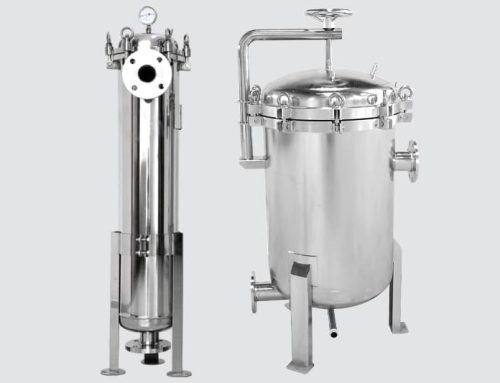
- Den Filterhus i rustfrit stål consists of four core components: the housing, multi-element filter cartridges, backflush mechanism, and differential pressure controller. The housing is divided into upper and lower chambers by a partition plate:
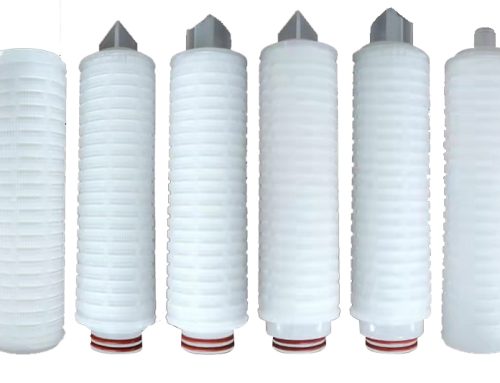
- Upper chamber: houses multiple filter cartridges arranged in a compact configuration to maximise filtration space and significantly reduce equipment size;
Lower chamber: equipped with a backflush suction cup, providing the physical foundation for subsequent automatic cleaning.
2. Dynamic Filtration Process
During operation, the fluid to be filtered enters the upper chamber through the inlet:
- Primary filtration: The liquid passes through the surface of the filter cartridges, with impurities being intercepted, and the clean liquid exits through the outlet into the process pipeline;
- Differential pressure trigger mechanism: As impurities accumulate, the pores of the filter cartridges gradually become blocked, causing the differential pressure between the inlet and outlet to continuously increase;
- Intelligent backwashing initiation: When the differential pressure reaches the set threshold, the differential pressure transmitter sends a signal to the controller, driving the motor to rotate the transmission components while simultaneously opening the drain valve.
3. Self-cleaning cycle mechanism
The backflush stage involves three coordinated operations:
The suction port precisely aligns with the filter cartridge inlet to form a negative pressure zone;
The drain valve opens to relieve system pressure, resulting in higher water pressure on the outer side of the filter cartridge than the inner side;
Clean liquid reverses flow to flush the inner walls of the filter cartridge, expelling accumulated impurities through the drain port and restoring filtration performance.

What are the benefits of stainless steel filter housing?
1. Innovative Filter Mesh Design
Adopts a high-strength wedge-shaped filter mesh structure with dual control modes:
- Differential pressure control: Triggers cleaning when impurity accumulation causes the differential pressure to rise to the preset value;
- Timed control: Automatically performs backflushing at set intervals to avoid manual intervention.
2. Efficient Cleaning Characteristics
The backflushing process exhibits three technical advantages:
Low water consumption: Only a small amount of clean liquid is required to complete filter core cleaning;
Continuous operation: Material conveyance remains uninterrupted during cleaning, ensuring production continuity;
Complete debris removal: A smooth inner wall design ensures no residue remains, preventing secondary contamination.
3. Industry Adaptability
Equipment performance parameters cover diverse application requirements:
- Filter precision: Filter mesh pore sizes adjustable from 50–1000 μm to accommodate varying impurity interception needs;
- Pressure compatibility: Offers material options such as cast iron, carbon steel, and stainless steel to match the highest pressure pipeline requirements;
- Quick response: A single backflush cycle takes only 23 seconds, significantly improving equipment utilisation.

How is filter housing technical parameters and setup specifications?
1. Key Technical Indicators
- Filter Mesh Aperture 50-1000μm (adjustable).
- Backwash Time Single cycle ≤ 23 seconds.
- Inlet/Outlet Diameter Matches pipeline size (DN50-DN300).
- Small Stress 1.0 MPa/1.6 MPa/2.5 MPa (3 alternatives offered).
- Product Options Cast iron, carbon steel, 304/316L stainless-steel.
2. Setup and Procedure Guidelines.
( 1) Installation Positioning.
Prioritise straight areas of the pipe system; stay clear of setup in locations with turbulence such as arm joints or valves;.
Ensure the tools is installed flat, with the inlet and outlet directions aligned with the circulation direction of the medium.
( 2) Maintenance Standards.
Regular Inspection: Document differential stress information month-to-month and display for leakages;.
Regular Maintenance: Dismantle the filter cartridge every 6 months for detailed cleaning and examine the O-ring seals;.
Winter Security: In northern areas, mount electrical home heating tools to stop tool freezing and expansion damages to the real estate.
( 3) Safety Workflow.
Conduct a pressure examination before the initial startup to validate no leakages whatsoever connections;.
Do not shut the drain valve during backflushing to stay clear of system pressure build-up;.
For cast ir.on models, the operating temperature must not exceed 150°C; for carbon steel models, the upper limit is 200°C.
Få et tilbud i dag!