
Bag filter , as the primary setting of industrial filtration systems, have been widely used in various industries due to their high-efficiency filtration capacity and simple operation characteristics ! This pressure filtration device not only has a compact structure, but also meets diverse filtration needs and has become an indispensable technical equipment in liquid purification processes.
Hvad er et posefilter?
Bag filter is a pressurized filtration device that focuses on the filter bag as the filtering element! It is mainly composed of key components such as filter housing, quick registration mechanism, sealing ring, etc. It presses the fluid to be filtered into the interior of the filter through external pressure, so that impurities in the fluid are intercepted by the filter bag, thereby achieving the purpose of solid-liquid separation or gas-solid separation;
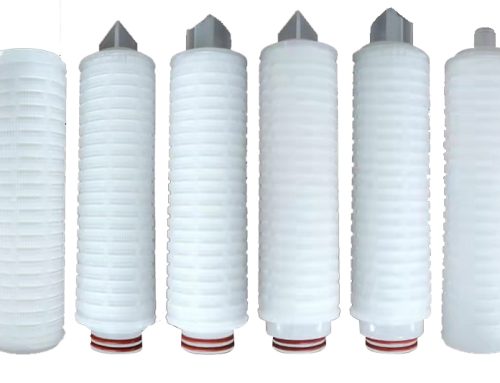
Compared with other exemplary filters, the biggest feature of bag filters is the interchangeability and diversity of their focal filter element – the filter bag! The filter bag can be made of various materials such as nylon and polytetrafluoroethylene according to different filtration needs, and the filtration accuracy can range from 1 micron to 200 microns. It can adapt to various scenarios from fine filtration to coarse filtration, whether it is treating industrial wastewater or filtering impurities in food and beverage processing. Suitable solutions can be found.

What are the components of a bag filter?
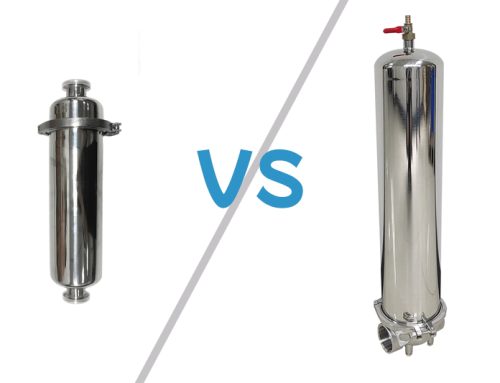
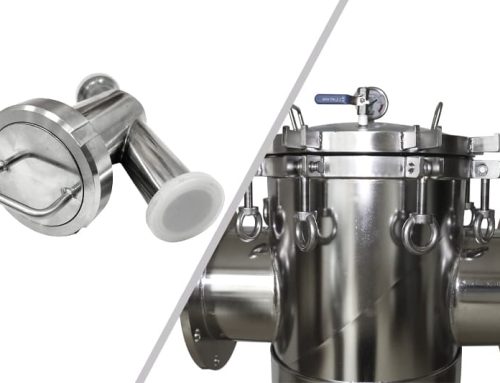
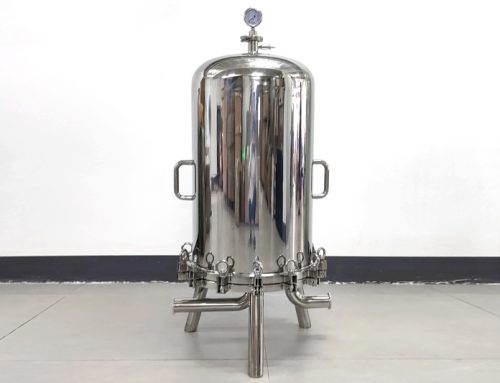
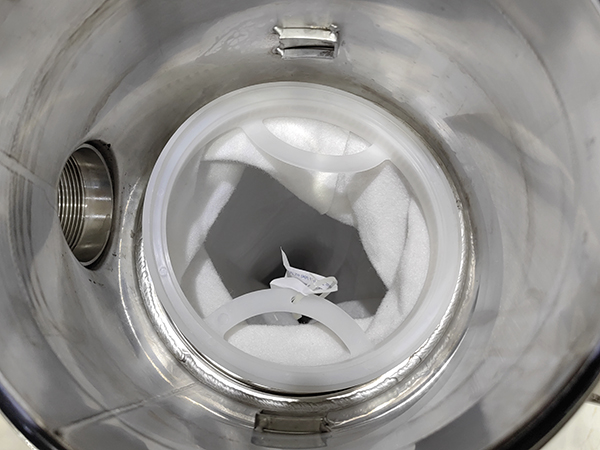
Bag filter is a versatile filtration device with a modern structure, simple and agile operation, energy-saving and efficient, and a sealed job. Its focal structure consists of three main parts: filter housing , filter bag , and support basket , forming an intact filtering unit;
The filter housing is usually made of stainless steel (such as 304, carbon steel, or polypropylene), which has good corrosion resistance and pressure bearing capacity, and can withstand working pressures of 0.1-0.6 MPa. The shell is designed as cylindrical or square, with an openable cover plate at the top and a convenient filter bag exchange;
As the core filter element, filter bags are commonly made of materials such as non-woven fabric and polypropylene. The pore size of these porous and fluffy filter materials determines the filtration accuracy, and the range is usually between 1-300 microns . High precision models can even achieve a filtration level of 0.5 μ m *.
Maintenance basket (also known as reinforced basket) is usually made of stainless steel and placed inside the shell. Its main function is to provide maintenance for the filter bag, prevent deformation or damage of the filter bag under liquid pressure, and ensure that the liquid can pass through the filter bag smoothly. The bag filter is also equipped with inlet and outlet connections, sealing components, and quick release locking assembly! The sealing component ensures that there will be no leakage during the filtration process, while the quick opening assembly makes filter bag replacement simple, fast, and significantly reduces maintenance time;
| Komponentnavn | Materiale | Function |
|---|---|---|
| Filterhus | Stainless steel 304/316L, PP polypropylene | Capable of withstanding working pressure, accommodating filtered liquid, and protecting internal components |
| Filterpose | Non woven fabric, PTFE | filter element, intercepting solid particles and impurities |
| basket | Stainless steel 304/316L | Supporting filter bag to prevent deformation or breakage under pressure |
| Tætningskomponenter | rubber, fluororubber | ensure the sealing of the filtration process and prevent liquid leakage |
| Quick opening assembly | Stainless steel | Easy to quickly open the top cover and replace the filter bag |

How does bag filter work?
The bag filter is based on the interception filtration mechanism to achieve solid-liquid separation. Its operation process can be divided into four main stages: liquid inflow, filtration interception, purification release, and filter bag replacement!
The working process begins with the inflow of liquid: the liquid to be filtered enters the bag filter through the inlet; The inlet is usually located on the side or top of the filter, and the internal flow guide device will evenly distribute the liquid, avoiding direct impact on the filter bag and causing one-sided wear or uneven filtration;
The filtering and retention process of the focus: The liquid passes through the filter bag under pressure, and the porous structure of the filter bag intercepts solid particles, suspended solids, and other impurities in the fluid! Impurities with particles larger than the pore size of the filter bag are effectively retained on the surface and inside of the filter bag, forming a filter cake layer.
Purification liquid discharge stage: The purification liquid passing through the filter bag gathers at the bottom or side outlet of the filter chamber, and is finally discharged for subsequent use, completing a filtration cycle!
Differential pressure monitoring and filter bag replacement: With continuous filtration, the impurities retained in the filter bag increase, the filtration resistance increases, and the pressure difference between the inlet and outlet increases! When the pressure difference reaches the set threshold (usually 0.05-0.1MPa), the filter bag needs to be replaced;
This task principle enables bag filters to efficiently remove impurities from liquids, ensuring the purity of the effluent. At the same time, due to the strong dirt holding capacity of the filter bag, the unit area of the filter bag can hold 3-5 times more dirt than that of a dry filter element, eliminating the need for frequent replacement and promoting continuous operation of the equipment.
What are the advantages of bag filter ?
The reason why bag filters stand out among numerous filtration devices and are widely used is mainly due to their comprehensive multiple outstanding advantages, which enable them to demonstrate excellent performance in different scenarios:
It has high filtering efficiency and is stationary! The fiber structure of the filter bag is specially designed to evenly retain impurities, avoid blind spots in filtration, and ensure that the filter bag with different precision can accurately meet the needs of filtration, ensuring that the cleanliness of the filtered fluid meets the standard.
What are types of bag filter?
In order to adapt to diverse production scenarios and filtration needs, bag filters have also evolved into various examples. Different types of equipment have their own advantages in structure and application. The following is a summary of types and applicable scenarios:
| Filter Type | Core Features | Applicable Scenarios |
|---|---|---|
| Single bag filter | Simple structure, moderate filtration flow rate, easy maintenance | Small and medium-sized enterprise small-scale filtration, laboratory filtration, single production setup supporting |
| Multi bag filter | Parallel design of multiple filter bags, high filtration flow rate, and the ability to achieve continuous filtration (some with switching valves) | Supporting large-scale production filtration, wastewater treatment stations, and continuous production lines in large factories |
| High temperature bag filter | Adopting high temperature resistant material shell and sealing components, capable of receiving high temperatures above 200 ℃ | Chemical reaction liquid filtration, high temperature oil filtration, boiler feedwater pretreatment |
| Acid and alkali resistant bag filter | The shell is made of stainless steel 316L or PP material, with strong corrosion resistance | Chemical acid and alkali solution filtration, electroplating wastewater treatment, semiconductor industry liquid filtration |

What are the applications of bag filter?
Bag filter hosuing play a key role in solid-liquid separation scenarios in many industries due to their flexible filtration accuracy, convenient maintenance, and wide adaptability;
The chemical industry is an important application area for bag filters, mainly used for raw material liquid pretreatment, solvent purification, catalyst recovery, and coating and ink filtration. In these scenarios, bag filters can effectively remove solid impurities from chemical raw materials and avoid clogging subsequent reaction vessels; Special filtration, color particles in ink, and even color of packaged products; Recovering catalyst powder from the solvent after the reaction and reducing raw material costs.
The demand for bag filters in the food and beverage industry mainly includes liquid raw material filtration, finished product cleaning, and impurity removal; In the process of wine production, bag filters are used to remove pulp residue and sediment, improving the clarity of the beverage! In edible oil processing, controlling phospholipids and impurities in the oil and prolonging the shelf life of the oil! Removing protein flocs in dairy production.
Bag filters are widely used in the water industry for industrial wastewater pretreatment, circulating water purification, and coarse filtration of drinking water! They can effectively block suspended particles in industrial wastewater and reduce the subsequent biochemical load; Filter scale and microbial sludge in circulating cooling water to prevent pipeline congestion; Pre treat groundwater or surface water to remove impurities such as sediment and algae!
The pharmaceutical and biological industries have extremely high demands for filtration accuracy and hygiene conditions. Bag filters are used for crude filtration of medicinal liquids, purification of process water, and filtration of intermediates; The specific application involves removing medicinal residues and fibers from traditional Chinese medicine extracts, laying the foundation for subsequent fine filtration! Purification of suspended solids in pharmaceutical process water to meet GMP water requirements. Filter bacterial impurities in biological fermentation broth to ensure subsequent purification compliance! Bag filters are widely used in industries such as electronics (ultra pure water pretreatment, photoresist filtration), automotive manufacturing (lubricant filtration, cutting fluid purification), and metal processing (coolant circulation filtration, acceptance of precious metals)!
This cross industry wide application fully reflects the irreplaceability and important value of bag filters in modern industrial production. Its efficient filtration capacity provides strong support for product quality control and process optimization in various industries!
Konklusion
Bag filters, with their simple design principles and efficient filtration performance, have become an indispensable filtration setting in modern industry! With the continuous progress of technology, the application fields of bag filters will be further expanded, and the filtration accuracy and compliance will be continuously improved, providing more reliable guarantees for the pure production of various industries.
Get The Solution Today!