

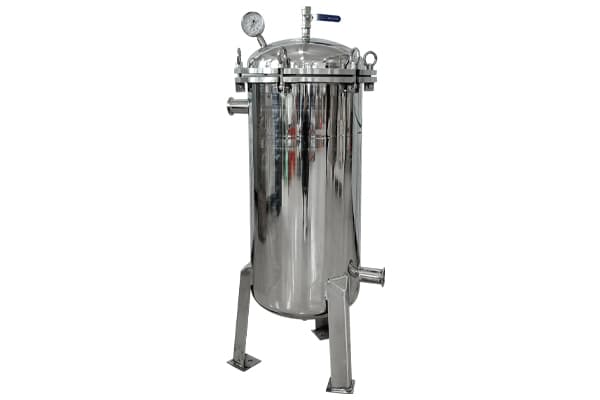
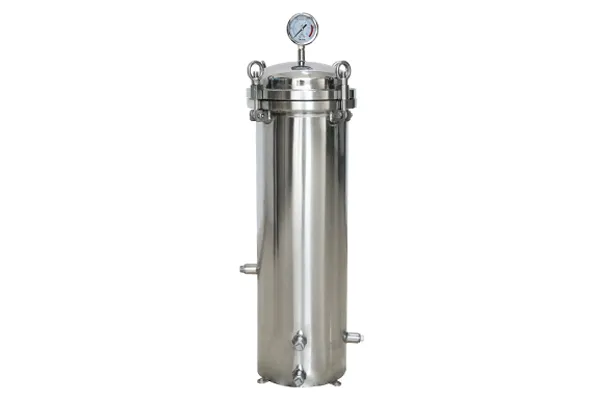
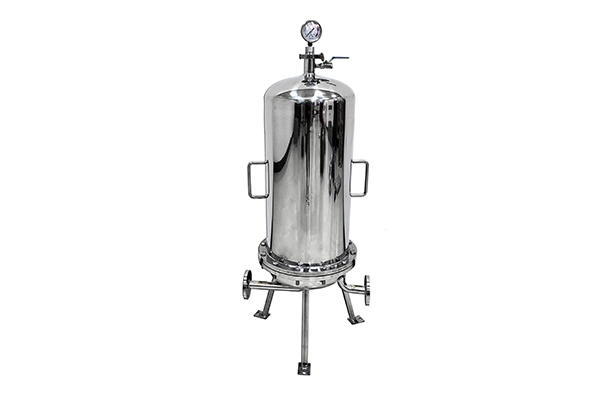
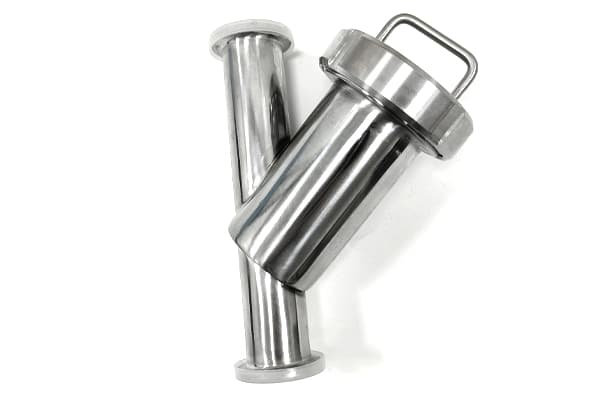
Flangia del cestello dell'acciaio inossidabile 304 316 con il secchio della rete metallica per filtrazione dell'acqua liquida dell'olio
- Utilizzato su oleodotti o condutture di liquidi per filtrare i detriti presenti nella conduttura.
- L'area di filtrazione è 2-3 volte più grande del tubo orifizio.
- Composto dal coperchio della flangia, dal corpo vasca, dal cestello e dagli elementi di fissaggio, ecc.
- Può essere installato sulla tubazione per rimuovere le impurità più solide.
- Può essere personalizzato in base ai requisiti del cliente.
Lvyuan Water Purification Equipment produce filtri a cestello industriali in acciaio inox 304 o 316. I filtri a cestello sono progettati per rimuovere le impurità solide di grandi dimensioni nei macchinari e nelle attrezzature per fluidi, compresi compressori e pompe, per garantire un processo e un funzionamento stabili. I filtri a cestello di Lvyuan sono costituiti da un subentrante, un barile, un cestello filtrante, una flangia, un coperchio della flangia e dispositivi di fissaggio. Sono disponibili in diverse dimensioni e possono essere personalizzati in base alle esigenze specifiche dei clienti. Lvyuan si impegna a fornire prodotti e servizi di alta qualità ai propri clienti globali.
- Materiale: Stainless steel (304 or 316 grade)
- Filtration Rating: Various micron ratings available
- Tipo di connessione: Flanged, threaded, or socket weld
- Pressione di esercizio: Typically up to 150 PSI (depends on size and rating)
- Temperatura di esercizio: Suitable for high-temperature applications
- End Connections: ANSI, DIN, JIS, or custom flange standards
- Design: Top removal or bottom-out design for easy maintenance
- Optional Features: Differential pressure gauge, vent, drain, etc.
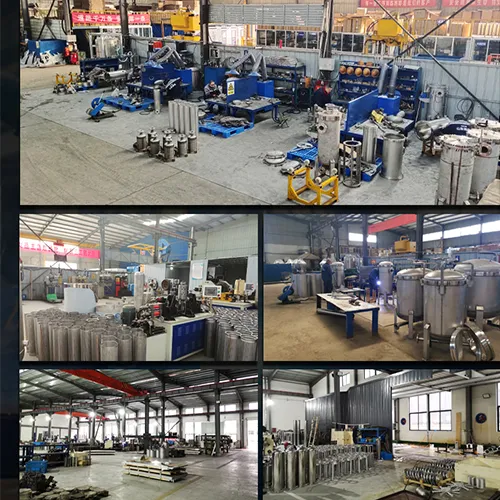
Lvyuan: Produttore professionale di filtri a cestello in acciaio inox
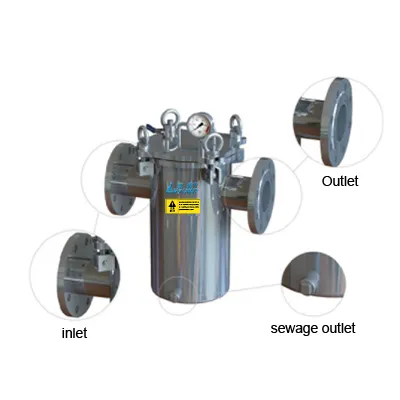
1. Fluid enters the filter housing from the inlet, solid impurities are intercepted in the filter basket, and clean fluid passes through the filter basket and is discharged from the outlet. When the pressure difference between the inlet and outlet increases to the set value or reaches the preset time, cleaning is required.
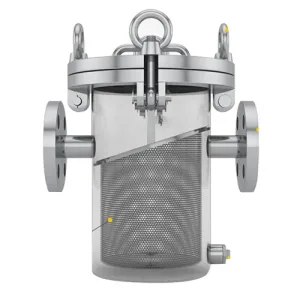
2. The structure mainly consists of a connecting pipe, a cylinder, a filter basket, flanges, flange covers, and fasteners. The filter basket is the core filtering element, often made of stainless steel woven mesh, punched plate, etc.
- Altezza di ingresso e uscita, diametro del tubo
- Supporto combinazione elemento filtrante + sacco filtrante + pompa
- Materiale Acciaio inox Z205/304/316/904
- Eyebolt Design: Easy to disassemble.
- Outlet: Basket filter adopts flange or threaded flat-in and flat-out design,which is convenient for pipeline laying.
- Liquid inlet: Flange or threadFlat in and flat out design. Easy to lay the pipeline.
- Filter basket: stainless steel , anti-corrosion and anti-rustfilter precision.
- Sewage outlet: When cleaning impurities, unscrew the plug for sewage discharge and install a stainless steel ball valve.
| ingresso e uscita | Pressione di esercizio (Mpa) | Precisione di filtrazione (μm) | Materiale |
|---|---|---|---|
| DN50 | 0.6 | 1-3000 | SS304-SS316L |
| DN65 | 0.6 | 1-3000 | SS304-SS316L |
| DN80 | 0.6 | 1-3000 | SS304-SS316L |
| DN100 | 0.6 | 1-3000 | SS304-SS316L |
| DN125 | 0.6 | 1-3000 | SS304-SS316L |
| DN200 | 0.6 | 1-3000 | SS304-SS316L |
| DN250 | 0.6 | 1-3000 | SS304-SS316L |
How does stainless steel basket strainer work?
1. Filtration stag: The fluid to be processed enters the interior of the cylinder from the inlet of the filter. Due to the obstruction of the filter basket, the fluid is forced to pass through the mesh of the filter basket. During this process, solid impurities with a particle size larger than the mesh size of the filter basket (such as rust, sediment, pipeline scale, etc.) are trapped on the inner surface or inside of the filter basket. The purified clean fluid is collected outside the filter basket and flows out from the outlet of the filter.
2. Cleaning trigger: As impurities accumulate on the filter basket, the permeability of the filter basket will gradually decrease, creating a pressure difference (pressure drop) between the inlet and outlet of the filter. The operator can set a maximum allowable pressure difference in the control system. When the actual pressure difference reaches this set value, or a fixed cleaning time is set based on experience the cleaning program will be triggered. There are mainly two types of cleaning methods:
- Manual cleaning: Close the inlet and outlet valves, open the flange cover on the top of the filter, directly lift the filter basket out by hand, rinse with a soft brush and clean water, and then reinstall it.
- Automatic/semi-automatic cleaning: The system will automatically open the drain valve and may drive a suction nozzle or brush to move inside the filter screen, sucking up or brushing away impurities and discharging them with the drain flow. The entire cleaning process usually takes only a few tens of seconds and does not affect the continuous operation of the system.
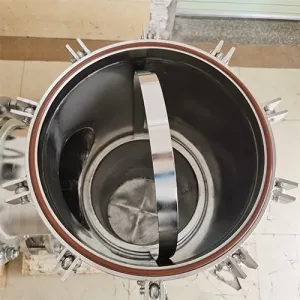

Manutenzione del filtro a cestello
Il componente principale del filtro a cestello è l'elemento filtrante, costituito da un cestello e da un telaio fisso. Quando il filtro a cestello funziona per un certo periodo di tempo, il cestello intercetta le impurità presenti nel liquido, la resistenza aumenta e la portata diminuisce. Se il filtro è danneggiato o deformato, il cestello del filtro deve essere sostituito in tempo.
How to choose the stainless steel basket strainer base on your need?
- Import and export diameter: It should not be smaller than the inlet diameter of the matching pump, usually consistent with the diameter of the pipeline.
- Nominal pressure and temperature: The pressure rating and material of the filter need to be determined based on the maximum pressure and temperature that may occur in the pipeline.
- Filtering accuracy (mesh/aperture): Choose according to the particle size of impurities you need to intercept. For example, if you need to filter small particles, you need to choose a higher mesh filter.
- Material compatibility: The housing material and sealing material of the filter must be able to withstand the corrosion of the processed medium (such as acidic and alkaline materials).
Stainless steel basket filters have become an indispensable “gatekeeper” in many industrial processes due to their simple and efficient structural design, reliable filtration performance, flexible configuration options, and convenient maintenance. I hope the above information can help you gain a more comprehensive understanding of this device.
If you have specific application scenarios or working conditions (such as the specific properties of the medium, flow requirements, etc.), sharing them may allow us to provide more specific selection ideas.




Contatto