
Introduktion
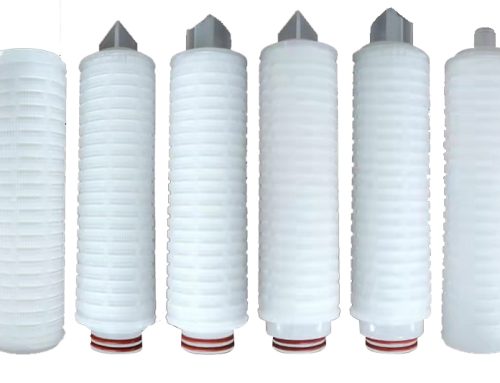
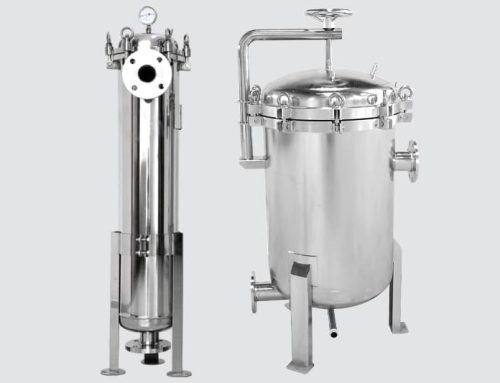
Patronfilterhus play a crucial role in water treatment and industrial processes by removing impurities and ensuring water quality. To maximize the efficiency and functionality of filters, it is essential to calculate the inlet and outlet flow rates accurately. This blog will discuss common methods for calculating the flow rates in and out of a filter to evaluate its performance and operational status.
1. Understanding Cartridge Filter Housing Inlet and Outlet Flow Rates
What are inlet and outlet flow rates?
The inlet flow rate refers to the amount of water entering the filter per unit of time, while the outlet flow rate measures the water leaving the filter after filtration. These rates are typically expressed in cubic meters per hour (m³/h) or liters per second (L/s).
Why are these calculations important?
Performance Evaluation: Ensures the filter’s design flow rate aligns with operational needs.
System Monitoring: Detects clogging or performance issues in the filter.
Efficiency Optimization: Helps improve filtration results and extends the filter’s lifespan.
2. Common Methods for Calculating Flow Rates
1. Using a Flow Meter
Flow meters are specialized instruments that measure water flow directly. They are installed on the filter’s inlet or outlet pipes to provide real-time readings.
Applikationer: Large-scale filters or systems requiring continuous monitoring.
Advantages: Simple, quick, and highly accurate.
Common Flow Meters:
- Electromagnetic Flow Meters: Ideal for conductive liquids.
- Turbine Flow Meters: Suitable for clean water systems.
- Ultrasonic Flow Meters: Non-invasive and effective for complex pipe networks.
2. Timed Sampling Method
This method involves collecting water samples over a fixed time and calculating the flow rate based on the volume collected:
Steps:
- Set a sampling time interval (e.g., 10 seconds).
- Measure the water volume collected during the interval (e.g., 1 liter).
- Calculate the flow rate:
Flow Rate (L/s)=Collected VolumeSampling Time\text{Flow Rate (L/s)} = \frac{\text{Collected Volume}}{\text{Sampling Time}}
Applikationer: Small filters or temporary flow measurements.
Advantages: Simple and low-cost.
3. Pressure Drop Method
Filters create resistance to water flow, resulting in a pressure difference (ΔP) between the inlet and outlet. This pressure drop can be used to estimate flow rates:
Principle: The flow rate is proportional to the square root of the pressure difference:
Q=C×ΔP
Where:
Q: Flow rate
C: Filter-specific constant (provided by the manufacturer)
ΔP: Pressure difference
Applikationer: Precision filters or multi-layer filtration systems.
Advantages: Useful in systems where direct flow measurement is impractical.
4. Water Level Difference Method
This method measures the difference in water levels between the filter’s inlet and outlet pipes extended into a tank or container:
Principle: The flow velocity is proportional to the height difference, calculated using Bernoulli’s equation.
Considerations:
- Ensure balanced pipe design to avoid turbulence.
- Use high-precision water level sensors.
Applikationer: Open-water systems or container-based filters.
3. Important Considerations
Choose the Right Method: Select a method based on filter size, flow range, and operating conditions.
Calibrate Instruments: Regularly calibrate flow meters or pressure sensors to maintain accuracy.
Account for System Variables: Consider water quality, temperature, and pipe design in calculations.
Monitor Changes: Record flow rate trends over time to detect clogging or inefficiencies early.
Konklusion
Accurately calculating a filter’s inlet and outlet flow rates is vital for assessing its performance and operational health. Whether using a flow meter for direct measurement, a timed sampling method for simplicity, or pressure-based techniques for indirect calculations, each method serves specific needs.
Regular monitoring and evaluation of flow rates enable users to optimize filter performance, reduce operational costs, and extend equipment life. These calculations provide valuable insights for improving filtration processes in industrial and water treatment applications.
Ofte stillede spørgsmål
1. What are the common sources of error in flow rate calculations?
Errors often arise from instrument inaccuracies, pipe resistance changes, or human errors. Regular calibration and system optimization can minimize these errors.
2. Which method is best for small filters?
The timed sampling method is ideal for small filters due to its simplicity and low cost.
3. Can the pressure drop method be used for all filters?
No, it is most suitable for precision or multi-layer filters where pressure differences are significant.
4. Do flow meters require professional installation?
It is recommended to have a professional install flow meters to ensure accurate readings and proper positioning.
5. How can I determine if my filter flow rate is normal?
Monitor flow rates regularly. A significant decrease may indicate clogging or other issues requiring maintenance or replacement.