
Inleiding
The core dilemma in industrial filtration systems often revolves around the choice between zakfilterhuis en patroonfilterbehuizing technologies. This paper systematically compares the differences between the two based on materials, performance parameters, and industry scenarios: bag filters dominate the coarse filtration field with their high flow rates and low costs, while cartridge filters excel in high precision and customization requirements. New materials (such as PTFE and ceramics) and smart modern technologies will certainly additionally enhance filtration efficiency. Industrial filters directly effect product quality and equipment life-span in sectors such as chemicals, pharmaceuticals, and food processing. As both mainstream innovations, filter bag housings and filter cartridge housings have actually long posed difficulties for customers as a result of significant distinctions in framework, materials, and performance. This article provides a basis for selecting industrial filtration systems through parameter comparisons, scenario adaptations, and trend projections.

Differences In Technical Principles and Structural
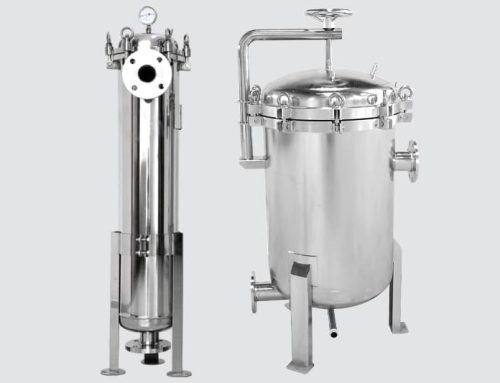
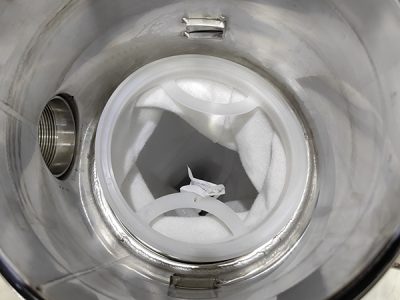
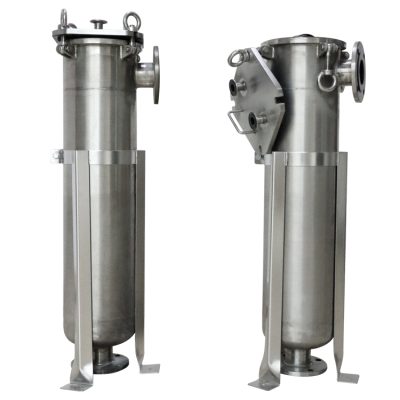
Bag-type filters utilize a surface filtration mechanism: fluid enters the container from the side, impacting the filter bag to form a uniform distribution, with impurities retained within the bag and clean liquid passing through the gaps between the filter bag fibers. Its advantage lies in its open structure—single-bag or multi-bag designs (such as side-in, bottom-out configurations) can accommodate high-flow scenarios, and the support basket requires only simple rinsing.
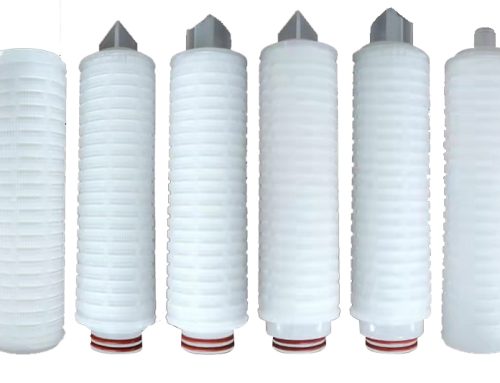
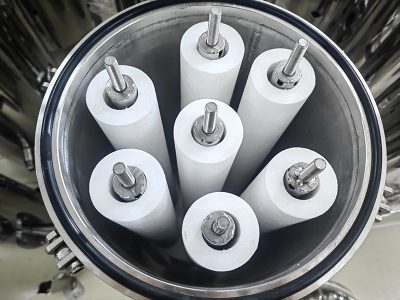
Cartridge filters rely on depth interception and adsorption: the liquid is forced through folded filter membranes, activated carbon layers, or porous ceramics, with impurities trapped within the micro-pores of the cartridge. For example, stainless steel cartridges form micron-level maze channels through sintering processes, enabling the capture of sub-micron particles. Structurally, they require precise sealing (e.g., O-rings), with complex replacement procedures but capable of withstanding high pressure (>100 bar).
Key difference: Filter bags are suitable for “quantitative changes” (high flow rate, low precision), while filter cartridges focus on “qualitative changes” (high purity, particle removal).
Differences In Parameter : Precision, Efficiency, and Cost
| Parameter | Bag filter housing | Patroonfilterbehuizing |
|---|---|---|
| Filter precision | 5–200 μm | 0.1–5 μm |
| Flow efficiency | up to 10 m³/h per bag | Lower flow rate |
| Initial cost | Low | High |
| Maintenance Cost | $1-10/bag | 5-100/cartridge filter |
| Pressure | Resistance <10 bar (PP housing) | >100 bar (stainless steel housing) |
| Toepassing | Wastewater, coatings, coarse-particle liquids | Ultra-pure water, pharmaceuticals, corrosive solutions |
Bag Filter Housing & Filter Cartridge Advances in Materials
| Materiaal | Temperature | Resistance Corrosion | Resistance Strength | Toepassingen |
|---|---|---|---|---|
| Polypropylene (PP) | <90°C | Resistant to weak acids | Moderate | Water treatment, food coarse filtration |
| PTFE | 260°C | Resistant to aqua regia | High | Acid and organic solvent filtration |
| Stainless Steel 316L | >500°C | Resistant to chlorides | Extremely high | High-temperature hydraulic oil, refining |
| Ceramic Composite | >170°C | Acid/alkali resistant | Low | Pharmaceutical sterile filtration |
| Glass Fiber | 280°C | Organic solvent resistant | Moderate | Flue gas dust removal, oil-water separation |
Innovation Directions:
- Polyetheretherketone (PEEK): Radiation-resistant filter cartridges for the nuclear industry, with a 300% increase in lifespan.
- Nano-coated filter bags: Polyester fiber coated with PTFE membrane, precision improved to 1 μm (5 times that of traditional filter bags).
Difference in Industry Application
- Chemical industry: Filter cartridges dominate! Strong acids (such as sulfuric acid mist) require PTFE filter cartridges; filter bags are only used for pre-filtration.
- Voedingsmiddelen- en drankenindustrie: Filter bags are superior! For coarse filtration of high-flow applications like syrup and edible oil, costs are reduced by 40%.
- Farmaceutische industrie: Filter cartridges are indispensable! Sterile filtration requires a pore size of 0.22 μm, and ceramic filter cartridges meet GMP standards.
- Power/Hydraulic Industry: Stainless steel filter cartridges are the best! They withstand high pressure (>200 bar) to prevent oil line blockages.
- Environmental exhaust gas: Glass fiber filter cartridges! Intercept asphalt smoke and chromic acid mist with 99.97% efficiency.
Difference in Cost and Maintenance
- Convenience of filter bags: Manual replacement in less than 5 minutes without shutdown (dual basket design allows switching).
- Hidden costs of filter cartridges: Precision filters call for specialist installation and removal, with downtime of 1 hour resulting in losses going beyond $10,000.
- Sustainable trends: Stainless steel filter cartridges can be washed 50 times, yet their lifespan is reduced to 5 times in chemically corrosive environments.
Conclusie
Filter bags and filter cartridges are not equally special but instead complementary in terms of precision and efficiency:
- Choose filter bags: High circulation rates, solid web content > 100 ppm, cost-sensitive applications (e.g., wastewater pretreatment).
- Select filter cartridges: Ultra-clean fluids, corrosive media, high-pressure environments (e.g., pharmaceuticals, precision chemicals).
Future developments hinge on product composites (e.g., ceramic + stainless steel filter cartridges) and intelligent maintenance, redefining the industrial filtering value chain through lifecycle expense optimization.
Vraag vandaag nog een offerte aan!