
What Function Do Pipe Stainer Play in Industrial Equipment?
1.Impurity Interception System : Literally traps strong fragments in liquids– such as welding slag, corrosion pieces, and sediment– through perforated steel plates or stainless steel mesh (commonly 0.1– 5mm aperture). For instance, in oil pipes, they catch contaminations ≥ 50μm to avoid pump impeller wear.
2. Devices Protection Applications :.
- Set up upstream of pump inlets to avoid construction particles from going into pumps, avoiding impeller seizure;.
- Protecting valve securing surfaces, such as Y-strainers in steam systems blocking rust to avoid globe shutoff leak;.
- Makes sure flowmeter accuracy, e.g., setting up basket filters prior to electro-magnetic flowmeters to stop fragments from interfering with sensing unit signals.
3. Technical Distinctions from Mesh Screens : Filters normally utilize filter aspects to capture micron-sized bits (1-100μm), while mesh screens just intercept bigger fragments (≥ 50μm) through apertures, commonly used in crude filtration phases.
How Does the Structural Style of Basket Filters Achieve Effective Filtration?
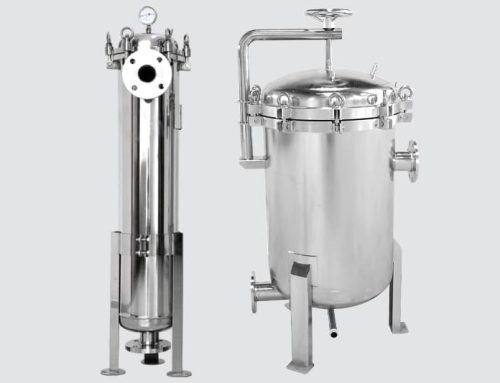
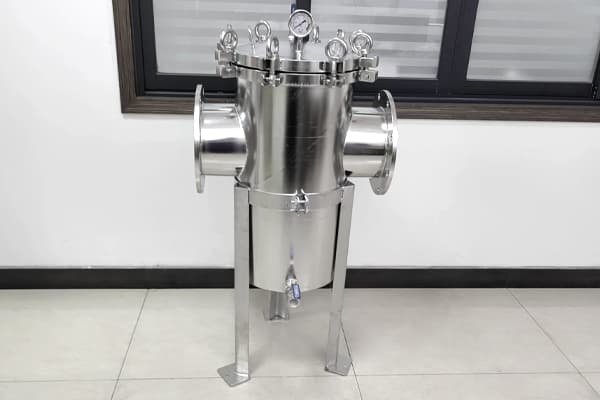
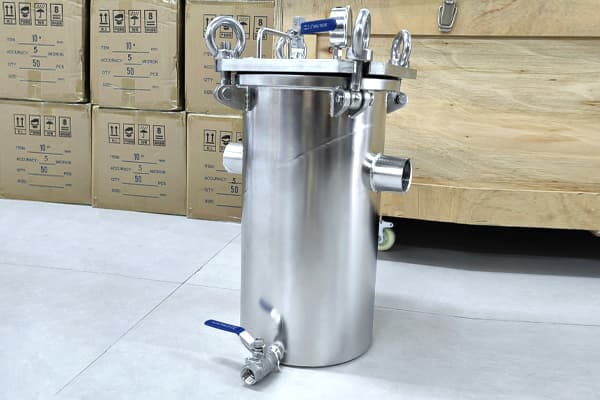
ال مصفاة سلة features a round text housing a removable basket-shaped filter display as the filtration device. Key technological details include:.
Hydrodynamic Layout:
- When set up flat, fluid gets in with the leading inlet, streams from the external to inner side of the basket mesh, and deposits contaminations at the basket base;.
- Dual-basket (substance) structures include two identical baskets, making it possible for “one being used, one on standby” via a switching shutoff. For example, in chemical activator feed pipelines, basket cleansing can be performed without stopping operation, protecting against product interruptions.
Mesh Material and Accuracy:
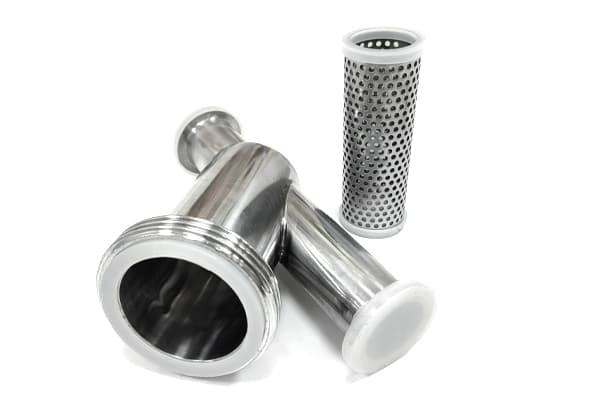
- Commonly makes use of 304/316L stainless-steel woven mesh with mesh counts varying from 20 to 200 (corresponding to pore sizes of 830– 74 μm);.
- Food industry applications need FDA compliance, using electropolished mesh to prevent media contamination.
Common Application Circumstances:
- In aeration pipelines at wastewater treatment plants, basket filters catch put on hold solids ≥ 100μm size to shield aerators from obstructing;.
- Installed before manifold distributors in thermal heating systems, basket filters obstruct corrosion particles to avoid warm exchanger blockages.
What Are Advantages Does the Y Strainer?
1. Area Adaptability:
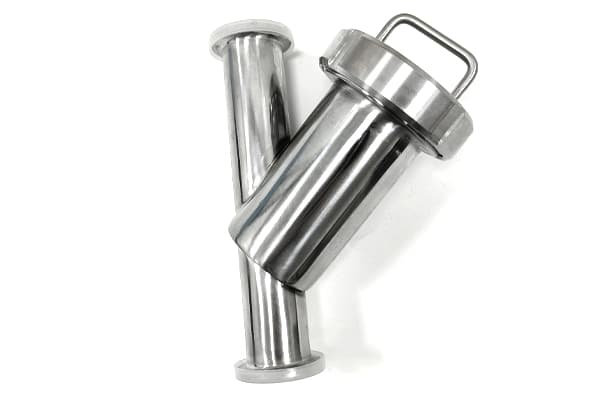
- Can be mounted vertically (liquid gets in from all-time low of the Y-shape and moves upwards with the filter display) or flat (fluid goes into from one side of the Y-shape and moves via the filter display to the other side). For instance, in skyscraper water system and drainage risers, vertically installed Y-type filters conserve horizontal space;.
- Pipeline size array DN15-DN300, specifically suitable for small-diameter pipelines listed below DN100, such as lab gas lines.
2. Stress and Temperature Resistance:
- High-pressure Y-strainers (e.g., ANSI 600-pound course) endure 41MPa stress, suitable for gas transmission pipes;.
- Steam-specific Y-strainers include carbon steel housings with heat dissipation fins, enduring temperatures up to 350 ° C( 732 ° F ), typically used in fabric manufacturing facility vapor coloring devices.
3. Maintenance Characteristics:
- Top-bolted end cover layout calls for system shutdown and tool drain throughout disassembly, with solitary upkeep cycles taking approximately 15-30 minutes;.
- Some versions consist of drain valves (e.g., DN20 bypass valve) for online filter display flushing, minimizing shutdown frequency.
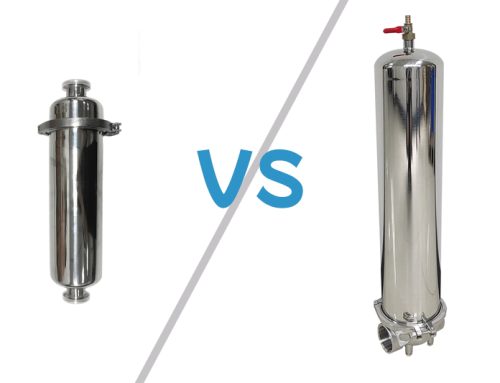
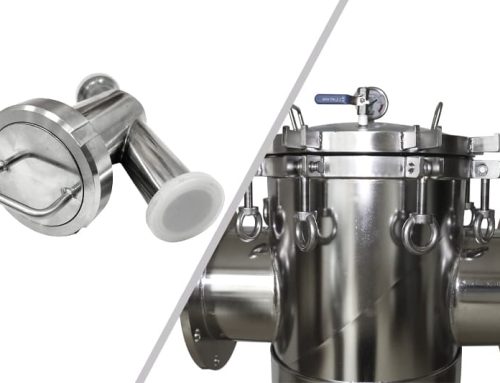
What are the differences in between basket strainer and Y Strainer?
| Contrast Thing | مصفاة السلة | Y Strainer |
|---|---|---|
| Liquid Flow Instructions | Top-in, bottom-out circulation in straight piping | Axial inflow, radial discharge with display in straight piping; bottom-up flow in upright piping |
| Filter Area | Big expanded basket screen area (e.g., DN200 basket filter screen area ≈ 0.8) | Conelike displays have smaller sized location (approx. 1/3 of basket type for exact same diameter) |
| Pressure Decrease Attributes | First stress drop 0.05-0.1 MPa; slow-moving boost after pollutant accumulation | Preliminary stress drop 0.03-0.08 MPa; faster increase due to smaller display area |
| Impurity Holding Capacity | Huge basket quantity, ideal for media with high impurity content (e.g., oilfield generated water) | Restricted inner area, requiring even more regular cleaning (e.g., salt water desalination pretreatment) |
How do the maintenance procedures and costs differ between the two filter types?
1.Basket Filter maintenance:.
- Close inlet/outlet valves of basket calling for cleansing; open bypass valve;.
- Remove basket end cap; essence filter display for high-pressure water rinsing (pressure ≥ 6MPa);.
- Evaluate filter screen for damage (permeability test with kerosene recommended); change seal ring and reassemble.
Expense Data : Annual upkeep costs for dual-basket filters are around 30% of single-basket filters, due to minimized production losses from downtime (e.g., chemical plants incur losses of 50,000-100,000 RMB per hour of closure).
2. Y Strainer Maintenance Challenges:
- End caps must be fully disassembled for cleaning; additional sealed recovery equipment is required if handling toxic gases (e.g., chlorine).
- Filter clogging alerts rely on manual pressure gauge monitoring (cleaning required when differential pressure ≥0.15MPa), resulting in low automation.
What are the applications of Y Strainers?
- Oil and Gas Industry:
- Installed upstream of wellhead Christmas trees to filter rock particles ≥200μm diameter, protecting choke valves;
- In gas regulation stations, paired with coalescing filter elements to remove liquid droplets and solid impurities from natural gas, meeting transmission standards.
- Food and Beverage Industry:
- During beer brewing, 316L stainless steel Y-strainers (100 mesh) installed in wort transfer lines intercept protein particles generated during mashing;
- Before ozone mixers in bottled water production lines, Y-strainers filter activated carbon particles ≥50μm to prevent mixer nozzle clogging.
What are the applications of basket strainers?
- Power Industry Applications:
- In thermal power plant condensate pipelines, basket filters (80 mesh) intercept metal debris from turbine seal wear, protecting low-pressure heaters;
- Nuclear power plants employ dual-layer basket filters in main loop coolant systems: inner 316L stainless steel mesh (50 mesh) + outer titanium alloy mesh (20 mesh) to prevent radioactive corrosion product deposition.
- Marine Engineering Case:
- In the fuel supply system of ocean-going cargo ships, dual basket filters (DN150) operate alternately to filter bituminous particles from heavy fuel oil, ensuring diesel engine nozzles remain unclogged;
- Ship ballast water systems employ basket filter pretreatment combined with UV disinfection to meet IMO D-2 discharge standards.
What are the performance and optimization solutions for basket strainers?
- Core Disadvantages Analysis:
- Pressure Drop Issue: When processing media containing fibrous impurities (e.g., paper black liquor), fiber entanglement on the filter mesh causes pressure loss to rise from 0.08 MPa to 0.3 MPa within 24 hours, necessitating backflush devices (e.g., compressed air backwashing).
- Space Constraints: Large-diameter basket filters (e.g., DN600) reach 2.5 meters in length, requiring reserved crane lifting space. Some offshore platforms adopt series-connected Y-strainer configurations due to spatial limitations.
- Technical Improvement Directions:
- Adopt wedge wire screens (V-wire structure) to enhance clog resistance by 50%, suitable for media containing particulate sludge;
- Integrate differential pressure transmitters with PLC control systems to automatically switch to dual basket filters when pressure drop ≥0.12MPa and trigger cleaning alarms.
How to choose strainers?
- Key Parameter Calculation Steps:
- Flow Rate and Pipe Diameter Matching:
- Recommended basket filter velocity ≤1.5m/s. Example: For a water system with Q=100m³/h using DN150 pipe (cross-sectional area 0.0177m²), velocity = 100/(0.0177×3600)≈1.58m/s. Select DN200 basket filter (velocity 1.1m/s).
- Impurity Content Calculation:
- If the medium contains ≥500mg/L solids, prioritize dual-basket filters. Single-basket cleaning cycle = basket volume × solids content / (1000 × allowable clogging rate). For example, with a 5L basket volume, 800mg/L solids content, and 20% allowable clogging rate, the cycle = 5 × 800 / (1000 × 20%) = 20 hours.
- Flow Rate and Pipe Diameter Matching:
Conclusion:
The technical distinction between basket strainer and Y strainers fundamentally represents a trade-off between “efficiency” and “flexibility.” In continuous production scenarios like petroleum and power generation, basket filters excel with their high dirt-holding capacity and dual-basket design. Conversely, Y-type filters demonstrate superior installation flexibility and cost-effectiveness across diverse applications such as municipal and food processing. For customized filtration solutions, contact us for fluid condition analysis and equipment selection services.
احصل على عرض أسعار اليوم!