
Selecting filtration equipment impacts both efficiency and cost, with the right مبيت مرشح الكيس being fundamental to effective separation operations.
In industrial filtration, choosing between single-bag and multi-bag filter units is a critical decision that directly influences filtration efficiency, operational costs, and equipment lifespan.
This article delves into the core differences between the two types, helping you make precise choices based on specific operating conditions.
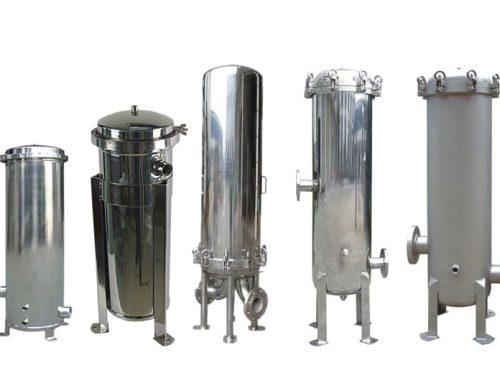
Types of Filter Housings
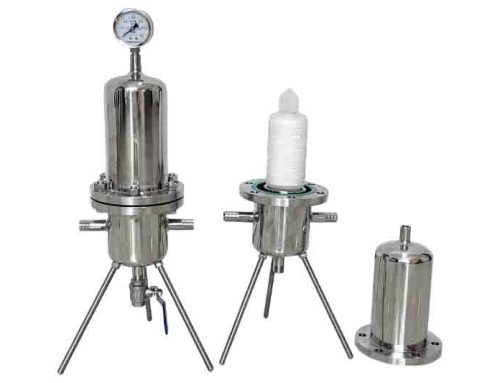
Single-bag and multi-bag filters are essential equipment for solid-liquid separation and liquid purification in modern industry. Single-bag filters feature a compact design, typically configured with a single filter bag (approximately 10 inches in diameter). They are ideal for applications with low flow requirements (generally ≤10m³/h), such as laboratories, small-batch food processing, or low-flow chemical purification.

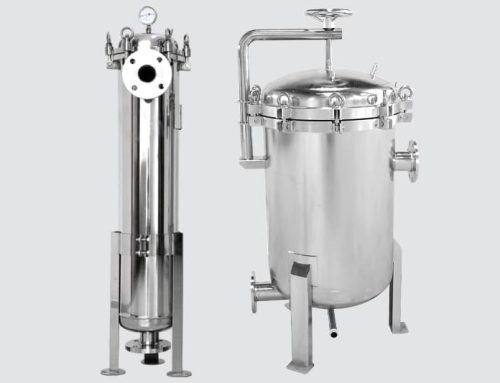
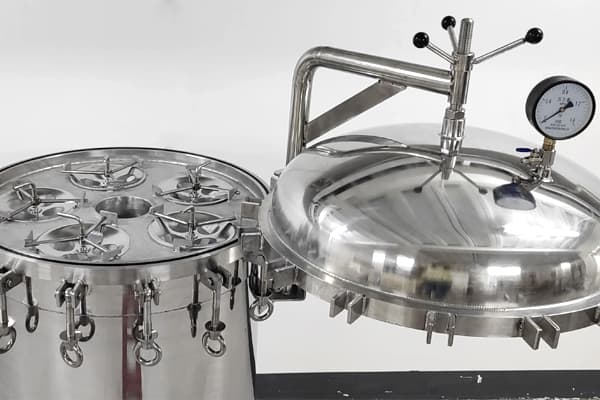
Multi-bag filters employ a parallel configuration of multiple filter bags (commonly 2 to 24 bags), significantly increasing filtration area to meet large-scale industrial continuous processing demands. Their flow capacity ranges from 50–50,000 m³/h, with substantially greater dirt-holding capacity than single-bag units.

Structural Design and Contaminant Holding Capacity
Single-bag filter units feature a simple design, typically employing top-entry or side-entry configurations with excellent sealing. Internally, a metal mesh basket supports a single filter bag. Liquid enters through the inlet, passes through the bag for filtration, and exits via the outlet, with impurities retained within the bag.
Multi-bag filters feature a more complex structure engineered for higher load capacity. They predominantly employ side-in/bottom-out or bottom-in/bottom-out configurations with thicker vessel walls (typically ≥3mm) and stronger filter bag support cages. This enables them to withstand higher operating pressures (standard models: 0.6–1.0MPa), while high-pressure custom variants accommodate specialized applications.
The core difference lies in contaminant holding capacity: Multi-bag filters utilize multiple bags working simultaneously, achieving a total contaminant capacity far exceeding single-bag filters. This means that under identical contaminant loads, bag replacement frequency is significantly lower, resulting in reduced downtime. They are particularly suited for filtering fluids with high contaminant content.
Performance and Precision
While both may offer comparable filtration precision (covering 0.5–200μm ranges), their operational stability and efficiency focus differs.
Multi-bag filters, due to their synchronized multi-bag filtration, typically offer greater precision stability (especially within the 0.5–100μm range). Fluid distribution across multiple bags is more uniform, resulting in lower pressure drop (typically ≤0.1MPa) and superior flow stability compared to single-bag systems. This makes them particularly suitable for high-precision applications.
While single-bag filters achieve comparable precision to multi-bag types, their single-bag structure limits contaminant holding capacity. When handling fluids with identical flow rates and impurity levels, more frequent bag replacement or cleaning may be required to maintain expected filtration efficiency and precision.
Material Selection and Durability Analysis
The material selection for both the filter housing and the filter bag itself is critical, as it directly determines the filter’s ability to withstand the chemical and physical conditions of specific operating environments.
Common Housing Materials include:
- 304 Stainless Steel: Suitable for conventional water quality/mildly corrosive media.
- 316/316L Stainless Steel: Used in highly corrosive environments (e.g., seawater, strong acids).
- فولاذ كربوني: Often used in non-corrosive environments, typically with surface coating treatment.
- Plastic (e.g., PP): Resistant to chemical corrosion, seamless one-piece construction, suitable for specific corrosive conditions.
Filter Bag Materials vary to meet different requirements:
- Polyester Fiber: General-purpose, temperature resistance ≤80°C, low cost.
- Nylon: Strong alkali resistance.
- Polypropylene (PP): Resistant to chemical corrosion.
- PTFE/Glass Fiber: High-temperature resistance (up to 150°C or higher) and chemical corrosion resistance, suitable for fine filtration and high-temperature environments.
Application Scenarios and Industry Uses
Based on flow rate, precision, and operating conditions, each filter type excels in distinct areas.
Single-Bag Filter Typical Applications:
- Laboratory R&D: Small-batch, multi-product liquid filtration.
- Small-scale Food & Beverage Processing: Clarification of juices, edible oils, and syrups in limited volumes.
- Low-Flow Chemical Purification: Fine filtration of pharmaceutical solutions, solvents, and chemical reagents.
- Small-scale water treatment systems: Sand interception in pretreatment stages.
Multi-bag Filter Typical Applications:
- Petrochemical industry: Large-scale continuous filtration, e.g., polymer, lubricant, and jet fuel filtration.
- Large-scale water treatment: Industrial water filtration, reverse osmosis pretreatment, and circulating cooling water systems.
- Pharmaceutical Industry: Bulk purification of active pharmaceutical ingredients (APIs) and clarification of formulations.
- Large-Scale Food & Beverage Production: High-flow purification for wine, beer, dairy products, and bottled water.

Cleaning and Maintenance Strategies
Proper maintenance is key to extending filter lifespan. For gas dust removal applications, cleaning is the core maintenance operation. Common cleaning methods include:
- Pulse-jet Cleaning: Suitable for industrial systems with high dust loads requiring continuous operation. Activates a pulse controller to trigger high-pressure compressed air (0.4–0.6 MPa) via solenoid valves for instantaneous bag cleaning.
- Reverse-Air Cleaning: Applicable for medium-to-large dust collectors or internal filter bags. Shut down the main fan, switch the reverse-flow valve, and introduce a reverse airflow (pressure 0.3–0.5 MPa) to clean the filter bags.
- Mechanical Vibration/Manual Tapping: Suitable for small equipment or loose dust deposits.
For liquid filtration, maintenance focuses on filter bag replacement and system cleaning:
- Filter Bag Replacement: Replace filter bags when the inlet/outlet pressure differential reaches 0.05–0.1 MPa or filtration efficiency significantly declines. In industrial liquid filtration, replacement cycles typically range from 3–6 months, extendable to 8 months with proper maintenance.
- System Cleaning: Thoroughly clean the equipment before filtering different liquid types. Soak and clean filter bags using warm water or neutral detergent, avoiding abrasion from hard brushes. Regularly inspect and clean seals.
General maintenance recommendations include: regularly monitoring differential pressure, avoiding overload operation (e.g., filtration velocity exceeding 1.5 m/min), maintaining medium temperature within filter bag tolerance limits, periodically lubricating moving parts, and considering pre-filtration devices in high-humidity or viscous dust conditions.
Customized Solutions
Standard products may not address all unique requirements, prompting many suppliers to offer customization services. Customization considerations include:
- Flow Rate and Filtration Accuracy: Determine the number, size, and precision of filter bags based on requirements.
- Operating Pressure and Temperature: Determine housing wall thickness, material, and sealing method. Jacketed insulated housings are suitable for high-temperature applications.
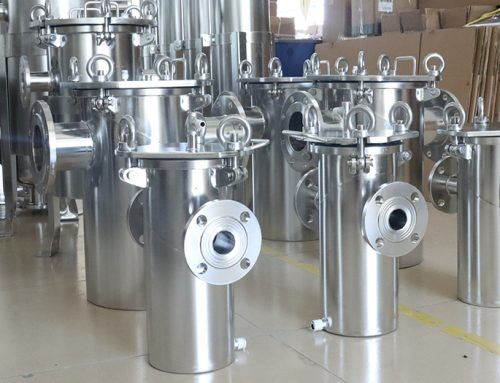
- Medium Characteristics: Corrosiveness, viscosity, impurity content, and particle shape dictate material selection and structural design (e.g., large-diameter flanges reduce flow resistance).
- Installation Space and Interfaces: Determine equipment dimensions, interface locations, and connection methods (flange, threaded, quick-connect).
- Automation Requirements: Such as quick-opening structures (quick-release ring bolts enable replacement within 30 seconds), pressure sensing, and automatic blowdown functions.
Single vs. multi bag filter
To assist in systematic decision-making, the table below compares core characteristics between single-bag and multi-bag filters:
| Characteristic | Single-Bag Filter | Multi-Bag Filter |
|---|---|---|
| Number of Filter Bags | 1 | 2–24 |
| Flow Rate Range | Typically ≤10m³/h | Up to 50–50,000m³/h |
| Contaminant Holding Capacity | Relatively small | Substantial |
| Filtration Precision | 0.5–200μm | 0.5–100μm (more stable precision) |
| Operating Pressure | Standard type | Standard type 0.6–1.0MPa, higher pressure tolerance |
| Maintenance Frequency | Relatively high (low dirt-holding capacity) | Relatively low (high dirt-holding capacity) |
| Unit Filtration Cost | — | Lower (high efficiency, relatively low filter bag cost) |
| Typical Applications | Laboratories, small-batch production, low-flow scenarios | Large-scale industrial continuous production, high-flow, high-precision scenarios |
Core Selection Factors:
- Flow Rate and Contaminant Load: The most direct determining factors. Consider single-bag systems for low flow rates and intermittent operations; prioritize multi-bag systems for high flow rates, continuous operation, and high contaminant content.
- Investment and Operating Costs: Single-bag systems may have lower initial investment, but frequent bag replacements increase labor and consumable costs; multi-bag systems require higher upfront investment but offer lower per-unit filtration costs and superior long-term economic efficiency.
- Ease of Operation and Maintenance: Single-bag systems feature simple structures with typically straightforward bag replacement. While multi-bag systems may require replacing more bags at once, their lower replacement frequency and quick-release designs ensure acceptable overall maintenance efficiency.
- Future Scalability: If future flow increases are anticipated, consider reserving space or selecting expandable multi-bag models.
Get A Free Quote Now!