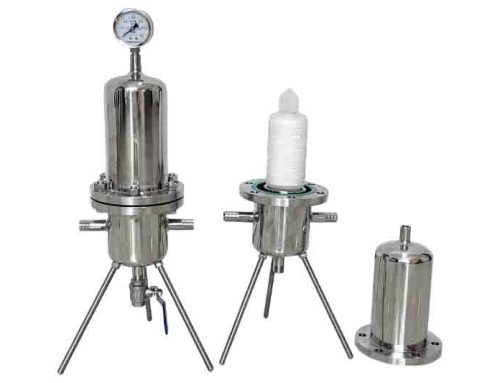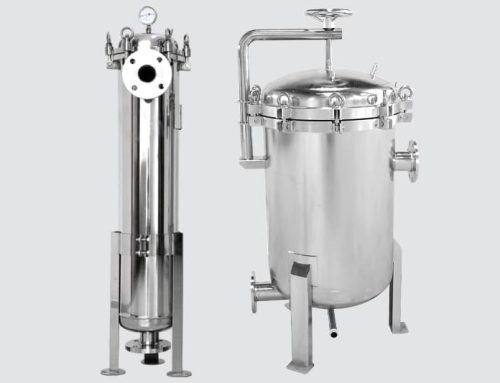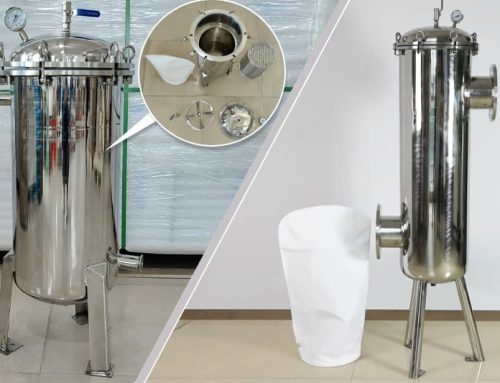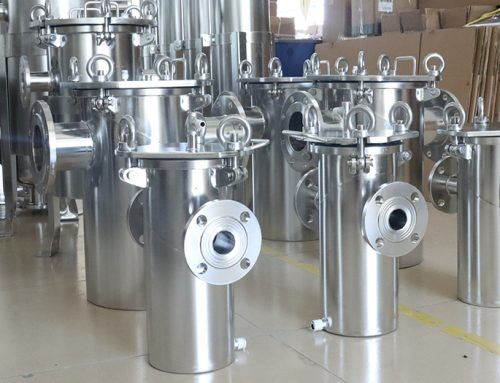

Stainless steel filter housing are widely used in liquid filtration systems, and the choice of material directly affects the service life, filtration efficiency, and operating costs of the equipment. Therefore, understanding the differences between SS304 and SS316 in filter applications is crucial. This article will provide a detailed analysis of the differences between SS304 and SS316, focusing on three core dimensions: corrosion resistance, pressure and temperature resistance, and application areas, to help you make more informed material choices in international trade of water treatment equipment.
What is a 304 stainless steel filter housing?
The SS304 filter housing is a type of external filter made from austenitic SS304, which consists primarily of 18% chromium and 8% nickel, with no molybdenum content. Its advantages lie in its excellent cost-performance ratio and good processing performance. It is suitable for filtering regular water quality, environments with low chloride ion concentration, and corrosive liquids such as weak acids and weak alkalis.

What is a 316 stainless steel filter housing?
Bu 316 stainless steel filter housing is a precision filtration device made of molybdenum-containing austenitic stainless steel. Compared with 304 stainless steel, its biggest feature is the addition of molybdenum, which makes it have superior resistance to chloride ion corrosion, suitable for harsh environments such as coastal areas and the chemical industry. Its surface can be electrolytically polished to meet high hygiene standards in pharmaceutical and food industries. The 316 stainless steel filter housing is the first choice for high-end water treatment systems.

Comparison of corrosion resistance between 304 stainless steel and 316 stainless steel
Corrosion resistance is the primary factor to consider when selecting filter materials, as it directly determines the service life of the equipment in specific water quality environments. Although both SS304 and SS316 are austenitic stainless steels, there are significant differences in their corrosion resistance. The standard composition of 304 stainless steel is chromium and nickel, which provides good basic corrosion resistance and enables it to resist atmospheric corrosion and corrosion in most freshwater environments.
In contrast, SS316 has added molybdenum to SS304, which greatly improves its corrosion resistance. The addition of molybdenum significantly enhances the material’s resistance to chloride ion corrosion, making SS316 filters one of the main choices for water treatment systems in coastal areas. For water treatment companies, accurately assessing the water quality of the target market is key to selecting filter materials.
Application differences between SS304 and SS316
As a professional water treatment company, understanding the suitability of 304 and 316 stainless steel filter housings in different applications can help you provide more professional advice to your customers and optimize your product portfolio. Due to performance differences, these two materials have different application areas in the water treatment industry.
SS304 filters have become the first choice for most conventional water treatment applications due to their good cost-effectiveness. This includes municipal drinking water treatment, industrial circulating water systems, and the primary filtration stage of wastewater treatment plants. In these applications, the water quality is relatively controllable and the chloride ion content is low, making SS304 fully capable of meeting the requirements. Especially for water treatment facilities with limited budgets or large scale projects, using SS304 filters can significantly reduce overall investment costs without significantly reducing equipment reliability.
Comparison of Chemical Composition of SS304 and SS316 Stainless Steel
The chemical composition and basic characteristics of a substance refer to its chemical makeup and inherent properties, respectively. The chemical composition describes the specific elements and compounds present in a substance, while the basic characteristics describe its physical and chemical properties, such as its color, shape, hardness, and reactivity?
There are fundamental differences in the basic chemical composition of SS304 and SS316 stainless steels, which directly determine their material properties. SS304 is a standard austenitic stainless steel containing approximately 18% chromium and 8% nickel, which provides good corrosion resistance and formability.
SS316 is based on 304 and contains 2-3% molybdenum, with an increased nickel content of 10-14%. This modification significantly enhances its corrosion resistance, particularly its pitting resistance in chloride environments.
From the perspective of physical properties, the density of SS316 (about 8.03g/cm³) is slightly higher than that of SS304 (7.93g/cm³), which is due to the increase of alloy elements. Both materials have an austenitic structure at room temperature, are non-magnetic, and cannot be hardened by heat treatment.
In terms of brand identification, SS304 corresponds to the Chinese standard brand 06Cr19Ni10 (old brand 0Cr18Ni9), while SS316 corresponds to 06Cr17Ni12Mo2 (old brand 0Cr17Ni12Mo2).
The table below summarizes the primary chemical composition differences between the two types of stainless steel:
| Elemental composition | SS304 | SS316 |
|---|---|---|
| Chromium (Cr) | Approximately 18% | 16-18% |
| Nickel (Ni) | Approximately 8% | 10-14% |
| Molybdenum (Mo) | Not added | 2-3% |
| Carbon (C) | ≤0.08% | ≤0.08% |
Which is better, mechanical strength or temperature resistance?
The mechanical properties of stainless steel filter housings are directly related to their ability to withstand system pressure and temperature changes. In terms of strength indicators, SS316 exhibits slightly higher yield strength (≥255MPa) and tensile strength (515-720MPa), compared to SS304, which has a yield strength of ≥205MPa. This difference allows SS316 filters to have a longer service life and better reliability in high-pressure environments.
In terms of high-temperature performance, SS316 also holds an advantage. The applicable temperature of SS304 generally does not exceed 300°C (intermittent use can reach 800°C), while SS316 can withstand higher temperatures and maintain good oxidation resistance in intermittent use below 871°C and continuous use above 927°C. It should be noted that in the temperature range of 427°C-857°C, SS316 may exhibit carbide precipitation issues, at which point the use of the low-carbon version 316L should be considered.
In terms of thermal conductivity, SS304 is slightly better than SS316 (16 W/(m·K) vs. 14 W/(m·K)). This characteristic may be a consideration in heat exchange applications, but it has little impact on most filtration applications.
SS316 also exhibits better low-temperature toughness, suitable for a temperature range of -50°C to 150°C, which is an important advantage in filtration applications in low-temperature or frozen environments.
What are the applications for the two materials?
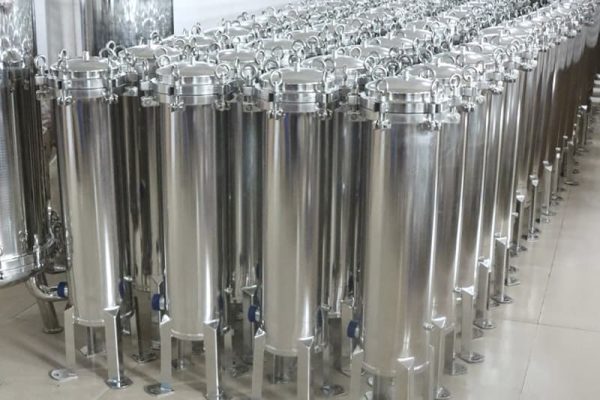
Based on the above performance differences, SS304 and SS316 filters each have their own applicable areas. SS304, with its cost advantage and sufficient performance, has become the first choice for many conventional water treatment applications. This includes municipal water supply systems, swimming pool circulating water treatment, indoor air conditioning water systems, and general industrial water treatment environments. In these applications, the water quality is relatively controllable and the chloride ion content is low, making SS304 fully capable of meeting the requirements and providing the best economy.
The filtration of non-acidic and alkaline media in the food and pharmaceutical industries often employs SS304 filters, as they are adequate for most food-grade filtration needs and are cost-effective.
In contrast, the SS316 filter is specifically designed for harsh environments. Marine-related applications such as seawater desalination systems, ship ballast water treatment, and coastal facilities are typical application areas for SS316. The high chloride ion content in these environments can quickly corrode SS304 materials, while SS316 can operate stably for long periods of time.
In the chemical and pharmaceutical industries, filtration systems, particularly those dealing with acidic media such as HCl and H2SO4, often utilize SS316 filters. Similarly, environments where chlorine is used for disinfection in wastewater treatment plants and high-temperature boiler feedwater systems are also areas where SS316 excels.
How to balance cost-effectiveness and service life?
In the process of selecting filter material, the trade-off between cost and lifespan is crucial. The initial cost of SS304 is significantly lower than that of SS316, with a price around 50-70% of the latter. This difference mainly stems from the different alloy compositions – SS316 contains molybdenum and additional nickel, both of which are higher-priced metal elements.
However, it is not comprehensive enough to simply compare initial costs. It is necessary to consider both service life and maintenance costs. In corrosive environments, the service life of SS316 may be several times longer than that of SS304, significantly reducing replacement frequency and downtime losses. For example, in environments with high chloride ion content, SS304 filters may need to be replaced within a few months, while SS316 can operate stably for several years.
From the perspective of Total Cost of Ownership (TCO), SS304 is usually the most economical choice for benign environments (such as freshwater treatment with low chloride ion concentration); while for medium to highly corrosive environments, despite the higher initial investment of SS316, its long-term economy is often better.
Cost considerations also need to be taken into account in terms of processing and welding. SS316 requires more strictly controlled welding processes (to avoid sensitization zones), and it is recommended to perform passivation treatment to improve corrosion resistance, which can increase manufacturing costs.
What are the key factors to consider when selecting filter materials?
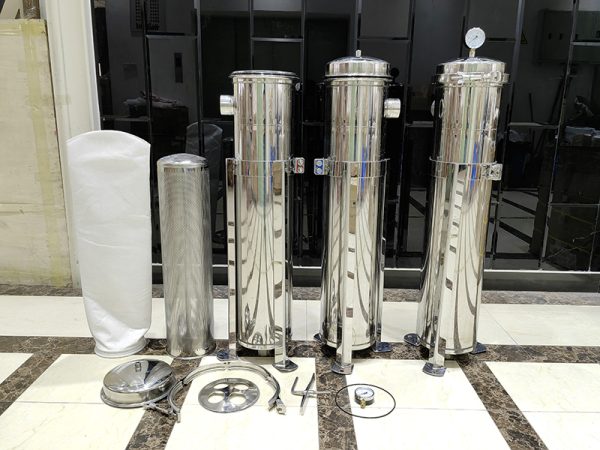
When selecting the most suitable stainless steel filter housing material for a specific application, several key factors should be systematically considered. The composition of the medium is the primary consideration, especially the concentration of chloride ions, pH value, and the presence of other corrosive chemicals. When the chloride ion content is high or the pH value is extreme, SS316 is usually a safer choice.
Operating temperature is also a decisive factor. High temperature environments not only affect material strength, but also accelerate the corrosion process. At operating temperatures above 300°C, the advantages of SS316 are even more pronounced.
The requirement for system pressure cannot be ignored. The higher yield strength of SS316 makes it more suitable for high-pressure environments. If SS304 is chosen, the wall thickness may need to be increased to achieve the same pressure rating.
Industry norms and safety requirements also influence material selection. The food and pharmaceutical industries may need to comply with specific hygiene standards (such as GB 4806.9-2016), while the nuclear industry or marine engineering have more stringent material certification requirements.
Finally, life cycle cost analysis should be part of the decision-making process. Taking into account initial investment, expected lifespan, maintenance costs, and failure risks, the most economically sound material choices can be made.
Sonuç
SS304 and SS316 stainless steel filter housings each have their unique areas of advantage. SS304 is cost-effective and suitable for most conventional water treatment environments, while SS316 exhibits excellent corrosion resistance and longer service life under harsh conditions. Wise choices are based on accurate assessments of the application environment and comprehensive consideration of overall costs, rather than solely based on initial prices. In environments with high chloride content, extreme temperatures, or strong corrosivity, investing in SS316 usually yields better long-term returns.
Get A Qutoe Today!