
ตัวเรือนถุงกรอง have become the preferred filtration equipment in many industries due to their simplicity, efficiency, and ease of maintenance. It is crucial to match the filter bag and the shell reasonably in order to achieve better filtration effect. This article will delve into the working mechanism, structural types, maintenance key points, and selection suggestions of bag filter housings, helping you optimize filtration solutions and improve production efficiency.
What is a bag filter?
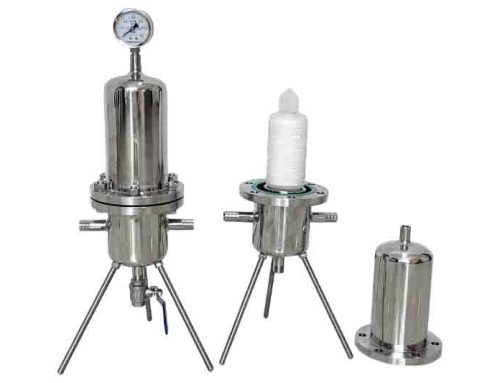
Bag filter is a type of pressure vessel filtration equipment, mainly composed of the following parts:
- Filter housing, used to accommodate filter bags and withstand process pressure
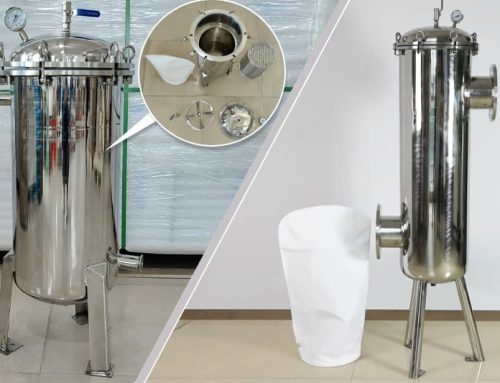
- Removable filter bag, used as a filtering carrier to block pollutants
- Internal support frame provides stable support for the filter bag
- Sealing device to ensure that fluid does not leak out
- Connection interface for easy integration with pipeline systems
There are various materials for filter bags, such as polypropylene, nylon needle felt, nylon mesh, and melt blown polypropylene fibers, which can be selected according to the filtration accuracy requirements. The shell is mostly made of corrosion-resistant stainless steel, which combines durability and hygiene and safety standards.

How does the bag filter housing work?
Bag filters work based on the principle of pressure driven filtration, and their core filtration mechanism is to filter the fluid through filter bags, trapping suspended impurity particles inside or on the surface of the filter bags, thereby achieving the purpose of fluid purification. The specific workflow is as follows: the liquid to be filtered enters the internal distribution system of the filter housing through the inlet pipeline, and the fluid flows from the inside of the filter bag to the outside under pressure. After passing through the filter bag with the required fineness level, qualified filtrate can be obtained, while impurity particles are effectively intercepted by the filter bag.
During the filtration process, the filter bag is firmly fixed by a metal support basket to maintain the optimal filtration form. The support basket not only prevents the filter bag from collapsing under pressure, but also ensures that the fluid passes evenly through the entire surface of the filter bag, maximizing the utilization of the filtering area. As the filtration process continues, the trapped impurities gradually accumulate inside the filter bag, which increases the resistance to fluid passage, manifested as a gradual increase in the pressure difference between the inlet and outlet. When the pressure difference reaches the set value (usually 0.05-0.1MPa), it indicates that the filter bag is approaching its capacity limit and needs to be replaced or cleaned.
Bag filters can adopt different flow designs, including two main methods: side inlet and side outlet and side inlet and bottom outlet. The side inlet and side outlet design allows liquid to be pressed in from the upper left inlet on the side of the filter and pass through the filter bag from the inside out; The side in and bottom out design allows the liquid to be discharged from the bottom outlet. These design flexibility enable bag filters to adapt to different installation spaces and process requirements
What are the types of bag filter housings?
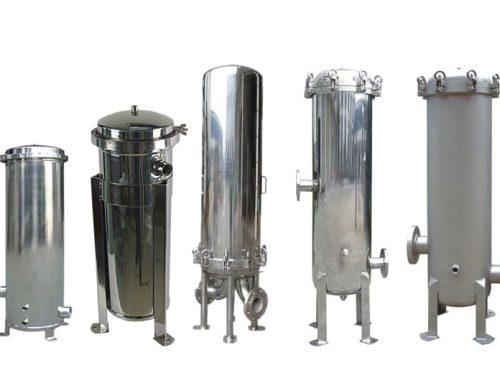
Bag filter housings can be divided into two basic types based on the inlet and outlet flow directions and the number of filter bags:
| พิมพ์ | คุณสมบัติ | แอปพลิเคชัน |
|---|---|---|
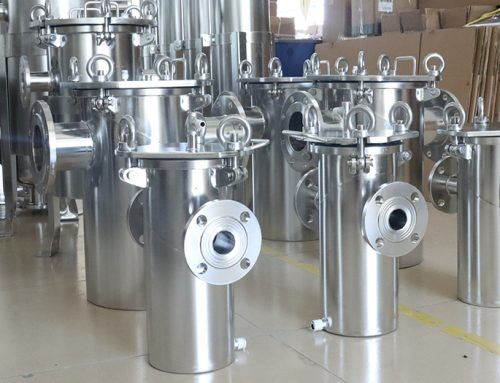
| Side entry filter housing | Fluid enters from the side, filter bag is horizontally installed, usually designed as a single bag | Suitable for small and medium-sized working conditions, economical and efficient, widely used in water treatment and light industry |
| Top in filter bag housing | Fluid enters from the top, the filter bag is vertically suspended, supports multiple bag configurations | Suitable for high temperature, high viscosity, and corrosive fluids, easy to maintain and quickly replace filter bags |
Optimization of the top entry structure flow path design minimizes residual liquid and ensures tighter sealing of the filter bag, meeting the requirements of complex or harsh working conditions.
What are the applications of different types bag filters?
According to structural design and application requirements, bag filters can be divided into multiple types, each with its unique advantages and application scenarios. Understanding these categories can help users choose the most suitable filtering solution.
A ตัวเรือนกรองแบบถุงเดี่ยว is the most basic form, consisting of a filter bag and a corresponding support basket. This type of filter has a compact structure, low operating costs, and easy replacement of filter bags, making it suitable for small flow processing scenarios. Single bag filters are commonly used for liquid purification in the chemical and pharmaceutical industries (such as filtering liquids and solvents), as well as for small flow water treatment systems (such as intercepting sediment in the pre-treatment stage).

เดอะ ตัวกรองถุงหลายใบ design includes 2-24 filter bags, which work in parallel to achieve high flow processing. The multi bag configuration significantly increases the processing capacity, reaching 50-5000m ³/h, making it particularly suitable for industrial large-scale continuous filtration scenarios. The advantage of multi bag filters is that each filter bag can obtain uniform fluid distribution, with low pressure loss (usually ≤ 0.1MPa) and better flow stability than single bag filters. This design performs well in high flow demand scenarios such as petrochemicals and large-scale water treatment.
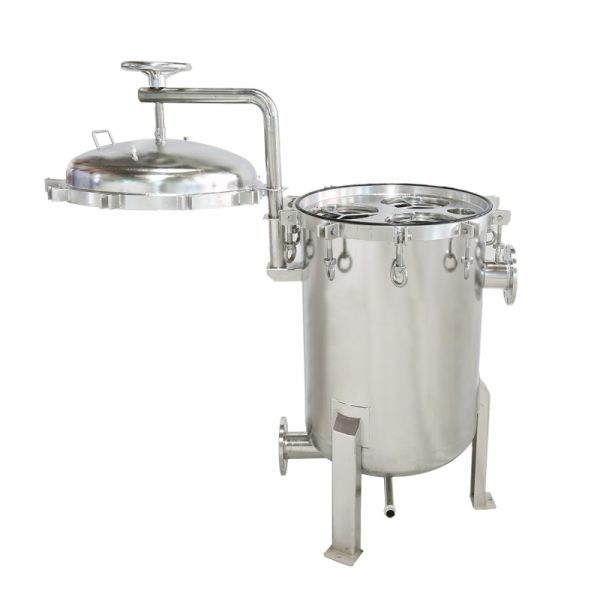
According to the feeding method, bag filters can be classified into two categories: side entry type and top entry type. The inlet and outlet of the side entry bag filter are designed on the side of the container, with a simple structure and few dead corners. It can flexibly adapt to the feeding direction, especially suitable for the food and beverage industry (such as syrup and juice filtration) and high viscosity liquid filtration (such as coating and resin impurity removal). The top in bag filter adopts a top in and low out design, where liquid enters from the top of the filter bag, reducing turbulence and extending the life of the filter bag. This design makes it more convenient to replace the filter bag, and simply open the top cover to directly remove and place the filter bag.
According to the different processing media, bag filters can also be divided into liquid filtration type and gas filtration type. Liquid filtration type mainly deals with various liquid media, such as chemical raw materials, food and beverage, industrial wastewater, etc; Gas filtration type is used for air purification, dust removal, and other applications, commonly found in electronic factory dust removal (intercepting 0.5-1 μ m particles) and hospital operating room air purification systems.
Bag filters for special application scenarios also have corresponding designs, such as high-precision filtration required by the electronics industry (FL series, 0.1 μ m), sterile filtration in the pharmaceutical industry (stainless steel top in type), and dust removal for central air conditioning systems in commercial building. These specialized designs take into account industry-specific requirements such as sterile conditions, ultra-high precision, or specific flow requirements.
What are the performance of bag filters?
-Flexible size and capacity to meet different flow requirements
-Designed for quick disassembly and replacement of filter bags
-Easy to clean and maintain production efficiency
-Reasonable structure, able to withstand pressure and extend service life
Why is cleaning and maintaining the bag filter housing so important?
Quick and effective cleaning and maintenance are key to ensuring the long-term stable operation of the filtration system. The ideal shell should have the following cleaning characteristics:
-High surface smoothness, avoiding the adhesion of pollutants
-Reasonable bottom structure design (such as sloping or concave bottom) to accelerate residual liquid discharge
-Short cleaning cycle, reducing downtime
-Partial structure supports quick disassembly of partitions, facilitating thorough cleaning of filter bag residues
Good cleaning design reduces the risk of secondary pollution, improves product quality and production safety.
How to choose the appropriate material for the bag filter housing?
Whether the material selection is reasonable directly affects the service life and filtration effect of the equipment. Key reference factors include:
-Chemical properties of filter media (acidity, alkalinity, corrosiveness)
-The working pressure and temperature range of the filtration process
-Requirements for environmental safety and hygiene standards
Common materials include alloys with strong corrosion resistance such as stainless steel 316L. Special working conditions may consider inner lining coatings or high corrosion-resistant alloy materials to avoid quality problems and safety hazards caused by the corrosion of the shell by the medium.
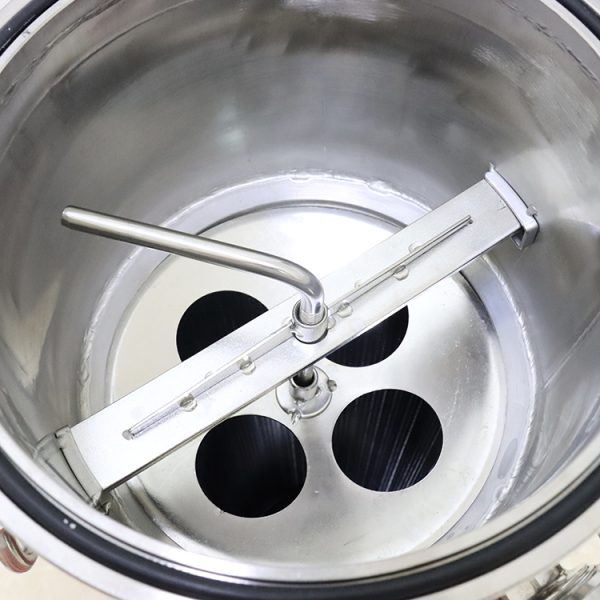
What shall we pay attention to in the operation and maintenance of bag filters?
Proper operation and regular maintenance are key to ensuring the long-term stable operation of bag filters. Establishing scientific management regulations can maximize equipment performance, extend service life, and reduce unexpected downtime.
Equipment installation is the first step in ensuring that the filter works properly.
During installation, the bag filter should be placed on the workstation to be filtered, connected to the inlet and outlet flanges or pipe teeth, and fixed; Block the exhaust port or install an exhaust valve. Gently place the metal inner mesh into the bag filter machine, ensuring that the collar of the inner mesh matches the mouth of the filter machine; Then place the filter bag so that the ring mouth of the filter bag matches the collar of the metal inner mesh; Then place the O-ring into the O-ring groove to ensure that it does not twist or deform. After installation, it is necessary to check whether each connecting pipeline is firm; Is the work pressure within the allowable range. When opening the input valve, the liquid should slowly flow into and fill the filter to prevent the liquid from suddenly impacting the filter bag and causing it to rupture.
Pressure monitoring is a core component in the operation of bag filters.
The filtration system at work needs to regularly check the pressure difference between the inlet and outlet. When the pressure difference reaches 0.05-0.1MPa, the filter bag should be replaced in a timely manner to avoid excessive pressure difference causing the filter bag to break and the support net to be damaged. The initial pressure is about 0.05 MPa. As the usage time increases, the amount of filter residue in the cylinder gradually increases. When the pressure reaches 0.4 MPa, the machine should be stopped for inspection. The normal operating pressure is generally adjusted to 0.1-0.3 MPa, which can be adjusted through the reflux pipeline or the reflux valve on the pump.
The replacement of filter bags requires strict adherence to safety regulations.
Firstly, it is necessary to open the lid of the bag filter without pressure inside to avoid any residual liquid spraying out and causing injury. The specific steps include: closing the input valve; Close the output valve when there is pressure at the outlet; Open the exhaust valve to safely release the pressure inside the pipeline; Check the pressure gauge to confirm that the internal pressure is 0; Open the drain valve to drain any remaining liquid and then close the drain valve; Finally, the filter cover can be opened to replace the filter bag. When replacing the filter bag, the high-efficiency filter bag needs to be wetted with pre wetted liquid that matches the filtered liquid to ensure the filtration effect.
Daily maintenance includes regular inspection of seals, cleaning of filter bags, and overall equipment maintenance.
When using the O-ring, it should be aligned with the O-ring groove and placed in it to avoid improper squeezing and deformation; When not filtering, it should be removed and wiped clean to prevent residual liquid from solidifying and causing poor sealing due to hardening. If the sealing ring has aged or been damaged, it should be replaced with a product of the same model in a timely manner. If the bag filter continues to filter the same liquid, it does not need to be cleaned; But if filtering other types of liquids, the machine needs to be cleaned before use. During maintenance, attention should also be paid to the possibility of reusing filter bags: non oily media can be backwashed and dried for reuse (limited to 3 times); High value filter bags (such as PTFE material) can be treated with ultrasonic cleaning machines.
The ability to diagnose and handle faults is crucial for maintaining continuous production.
Common faults include damage, blockage, and leakage of filter bags. The damage to the filter bag is often located at the bottom of the bag due to material accumulation at the bottom of the equipment; Damaged in the bag and with large burnt beans, it is often caused by high-temperature particles; Damage to the bag opening is often caused by a malfunction in the blowback system. The main reasons for filter bag blockage are high filtration speed, fine or sticky dust, poor dust cleaning, condensation, etc. By regularly checking the pressure difference and observing changes in emission quality, problems can be detected early and corresponding measures can be taken
.
รับใบเสนอราคาทันทีวันนี้!