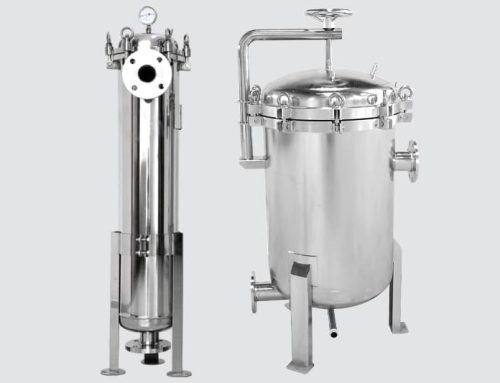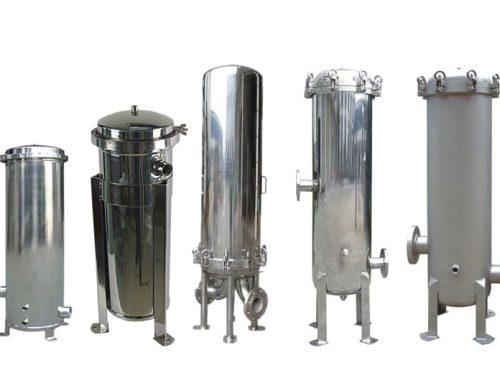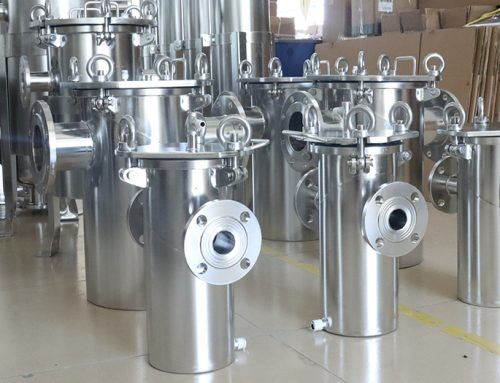

In industrial production, steam is the core medium for heating, disinfection, and power generation, but its purity directly affects equipment and product quality; The steam filter, as a key equipment to ensure the purity of steam, ensures the safe and static operation of the system by removing impurities;
What is steam filter?
A steam filter is an assembly installed on a transport medium pipeline, usually placed at the inlet end of a pressure reducing valve, a constant water level valve, or other device, used to remove impurities from the medium to protect the normal application of the valve and device. When the fluid enters the filter cartridge with a certain specification of filter screen, its impurities are obstructed, while the pure filtrate is released from the filter outlet;
The focal efficiency of steam filters is achieved through mechanical interception mechanism, which deceives multi-layer metal wire mesh (usually 316L stainless steel, pore size 80-100 mesh) to intercept solid particles in pipelines. According to fluid dynamics principles, when a particle layer of 0.1-0.3mm is formed on the surface of the filter screen, the filtration efficiency can be improved to 98%;

Why steam filter is it necessary in industrial applications?
The main reason why industrial applications must be equipped with steam filtration devices is that impurities in unfiltered steam can seriously affect the setting instinct and product quality! The pollutants in steam trap rust, welding slag, and other solid particles, which can wear down internal components of equipment, clog valves and heat exchangers, leading to low efficiency and frequent maintenance.
In the process of producing full steam, filters are often integrated with swirl plates or baffle structures, which deceive centrifugal force to separate liquid (water points). Installing a 60 ° inclined swirl device can increase steam dryness from 85% to 93%, significantly reducing the risk of water hammer in downstream equipment; the use of steam filters can bring significant economic benefits. Chemical plants can reduce downtime costs by up to 1.2 million yuan annually by installing suitable steam filters; thermal power plants can improve condensate water recovery rates through efficient filtration, saving 640000 yuan in water costs annually! Food sterilization lines can increase product qualification rates from 98.5% to 99.9% due to improved steam purity, increasing annual income by 2 million yuan;
What are the components of steam filter?
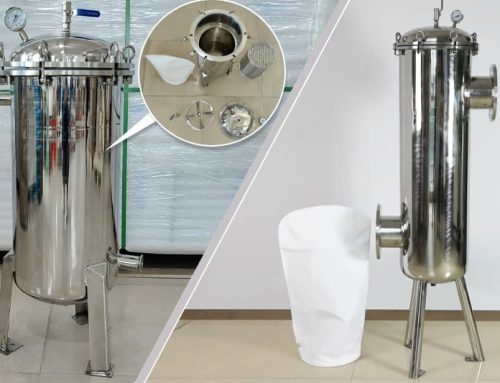
The steam filter is mainly composed of two key components: the filter element and the casing. The shell is usually made of stainless steel material (such as 304 or 316L) to ensure the high temperature resistance of the filter!
The filter element is a key component of steam filters, with various materials including polytetrafluoroethylene (powder sintered), stainless steel folding filter element, titanium alloy, etc! The filter structure is designed to be easy to replace, and the package can filter out condensed water without being congested or contaminated by a large amount of impurities!
Functions and Materials of Steam Filter Focus Components
| Component Name | Main Functions | Common Materials | Характеристики |
|---|---|---|---|
| Shell | Carrying internal components, providing cherish and support | 304/316L stainless steel, alloy steel | High temperature resistant, mechanically polished contour |
| Filter element | Retains solid particles and impurities in steam | Polytetrafluoroethylene, ceramic | Can filter 1-100 μ m particles, resistant to high temperatures above 280 ℃ |
| Sealing components | Ensure sealing at the interface | Fluororubber, nitrile rubber, graphite | High temperature resistance, prevent steam leakage |
| Sewage assembly | Discharge accumulated pollutants and condensed water | Stainless steel, carbon steel | Located at the bottom of the filter, controlled by valves for discharge |
In addition, the steam filter can also be equipped with auxiliary components such as pressure monitoring assembly and automatic sewage system. The intelligent filter is also equipped with a differential pressure sensor, which automatically triggers the pure gauge when the resistance exceeds 0.15 MPa;
What are the types of steam filters?
Steam filters can be classified in various ways, including filter media, installation methods, and performance characteristics; According to the differences in filtering media, steam filters can be divided into categories such as air filters, liquid filters, network filters, and rear light filters!
According to performance characteristics, steam filters are mainly divided into the following types:
- Y types trainer: used to search for particles>500 μ m, commonly found in the main pipeline of boiler outlet, mainly removing larger particles!

- Basket stainer : equipped with a double-layer filter (outer layer 80 mesh+inner layer 200 mesh), suitable for high demand scenarios such as pharmaceutical sterilization equipment.
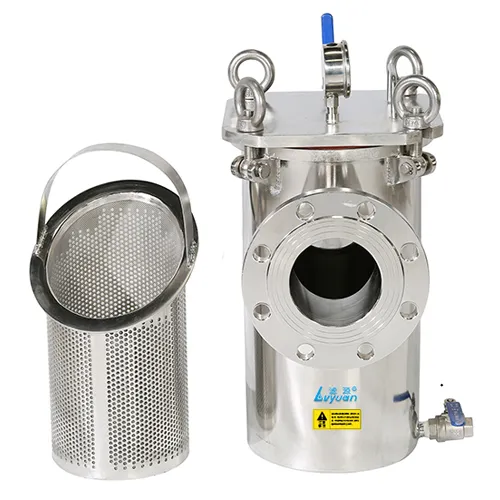
- Self purifying filter: voluntarily removes filter residue through reverse pulse airflow (0.6-1.0MPa nitrogen), reduces downtime, and is widely used in the chemical industry; -High temperature resistant filter: Adopting Inconel625 alloy filter element, it can withstand temperatures up to 540 ℃ and is used in extreme environments such as supercritical steam power generation systems. According to the additional requirements of the application scenario, there are also specialized filters for industries such as nuclear power and pharmaceuticals. For example, in the nuclear power field, fully welded zirconium alloy shells with a design life of up to 40 years are required.
What filtering media are used in steam filtration?
There are various types of filtering media used in steam filters, mainly including sintered filters, pleated mesh filters, and pleated sintered metal fiber filters; The sintered filter is made by forming a tube with metal powder at high temperature and high pressure, which has a tight pore structure and can effectively capture particles, but the flow rate and surface area are relatively low. Advanced filtration media technologies continue to emerge:
PTFE filter It has strong hydrophobicity (contact angle>110 °), strong acid and alkali resistance (pH 1-14), and a filtration accuracy of 0.1-10 μ m; Suitable for food sterilization steam degreasing (adsorption of oils and fats follows>95%) and chemical viscous steam treatment;
PES filter: with high flow rate (water flux>500 LMH/bar) and resistance to wet heat sterilization (121 ℃/30min)! Applied to biopharmaceutical pure steam terminal filtration (0.22 μ m sterilization grade) and laboratory clean steam supply, with a normal application cycle of 6-12 months! –
Ceramic filter: Contains alumina (Al ₂ O3) membrane and silicon carbide (SiC) membrane! Aluminum oxide film has a temperature resistance of ≤ 800 ℃, silicon carbide film has ultra-high hardness (Mohs 9.5), and is used for extreme environments such as liquid metal vapor filtration in nuclear fusion reactors and steam cleaning in aerospace engines.
The cutting-edge technologies also include graphene reinforced membranes (supplementing 0.1% graphene to increase the thermal conductivity of stainless steel membranes by 300% and reduce pressure loss by 45%) and intelligent responsive membranes (pH/temperature sensitive polymer membranes, voluntarily adjusting pore size). These improved technologies have significantly improved the compliance and reliability of steam filtration!

How are the applications for steam filters ?
Steam filters have critical operations in multiple industries, each with its specific requirements and standards; In the food and pharmaceutical industries, steam filters are used to ensure the stability of direct contact with steam.
In the energy and power industry, as well as in thermal power plants, high-temperature and high-pressure resistant filters (with a temperature of 540 ℃ and a filtration accuracy of 80 mesh) are required for the main steam pipeline at the boiler outlet to protect the turbine blades; The application of Inconel718 filter element in a certain 600MW unit reduces blade maintenance costs by 2.8 million yuan per year!
In the field of petrochemicals, steam filters are used in catalytic cracking units to filter catalyst dust (particle size 10-200 μ m), using self-cleaning pulse blowback technology. In steam flooding operations, the filter ensures that the injected steam dryness is>80% and improves thermal recovery efficiency by 12%! In regional heating systems, steam filters can prevent heat exchanger scaling, improve thermal efficiency, and reduce annual maintenance costs by 23%! The hospital disinfection supply center needs to ensure that no water points or endotoxins are detected in the steam, use polytetrafluoroethylene (PTFE) membranes, and conduct daily biological monitoring;
What are the key effects of steam filtration process?
The key effects achieved in the steam filtration process include particle blocking, steam water separation, microbial control, and chemical filtration; Particle interception is a basic function, using multi-layer stainless steel filters (80-200 mesh) to remove particles larger than 5 μ m (such as rust) in steam, with a filtration efficiency of up to 95-99%, significantly reducing the wear risk of downstream equipment (such as valves and heat exchangers).
The steam water separation function is achieved through the integration of swirl plates or baffle structures, with a separation efficiency of over 90% and an increase in steam dryness from 85% to 93-98%, effectively reducing the appearance of water hammer; In the paper industry, for every 5% increase in steam dryness, the drying efficiency can be increased by 3%;
Microbial control functions are particularly important in the pharmaceutical and medical fields. Steam filters can remove bacteria and microorganisms, ensuring sterile entry!
Chemical filtration is effective for operations that require high steam purity, and can remove gases and volatile compounds! Some steam filters have chemical filtration functions, which are particularly important in avoiding chemical pollution, such as in the microelectronics and fine chemical industries;
How to choose a suitable steam filter model?
Choosing the appropriate steam filter model requires comprehensive consideration of multiple factors; The inlet and outlet diameter is the primary factor, and in principle, the inlet and outlet diameter of the filter should not be smaller than the inlet diameter of the matching pump, generally consistent with the diameter of the inlet pipeline;
The selection of filtration accuracy and pore size mainly considers the particle size of impurities that need to be intercepted, and is determined according to the process requirements of the medium! The vapor phase is an important consideration factor: metal/ceramic film (high temperature resistance) is preferred for superheated steam, and PTFE/PES film (temperature control<260 ℃) is optional for saturated steam!
The selection of filter material is equally crucial, and it is generally chosen to be the same as the material of the connected process pipeline. For conflicting service items, filters made of cast iron, low-alloy steel, or stainless steel can be considered! Further consideration needs to be given to cleaning compatibility: For CIP/SIP requirements, choose PES/ceramic film (acid and alkali resistant and high-temperature sterilization), and for online backwashing requirements, choose metal fired film (high mechanical strength)! The final selection should be based on the actual flow rate of the filtered gas, the desired results, and budget factors!
What are the future development trends of steam filtration technology?
The future development trend of steam filtration technology is towards intelligence, greenness, and extreme adaptability. In terms of intelligence, digital twin and predictive maintenance technology integrate pressure/temperature/vibration sensors, combine physical models with real-time data to construct digital images.
The trend towards greenization focuses on energy efficiency improvement and carbon reduction! EU discussion shows that optimizing steam filters can reduce boiler fuel consumption by 1.2-1.8%, equivalent to an annual carbon reduction of 72-108 tons per 10t/h boiler!
In terms of adaptability to extreme working conditions, NASA has developed silicon carbide fiber reinforced aerogel filter element for deep space search needs, with appropriate temperature change of -180 ℃~300 ℃ and high radiation environment! In the field of nuclear fusion, the ITER project adopts a composite structure of tungsten wire fabricated filter and electromagnetic transformer to respond to the challenge of high-temperature liquid metal vapor filtration.
The manipulation of new materials is also a key focus for future development. Improved materials such as graphene reinforced membranes and intelligent corresponding membranes will significantly improve the performance and applicability of steam filters, providing more efficient and reliable filtration solutions for various industries!
As the guardian of industrial steam systems, steam filters ensure the purity and safety of steam applications in various industries through continuous innovation in technology and design. With the development of intelligent and green technologies, steam filters will play a more important role in industrial energy conservation, consumption reduction, and sustainable development!
Get A Solution Today!