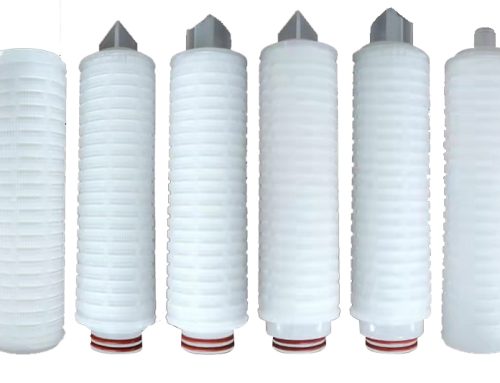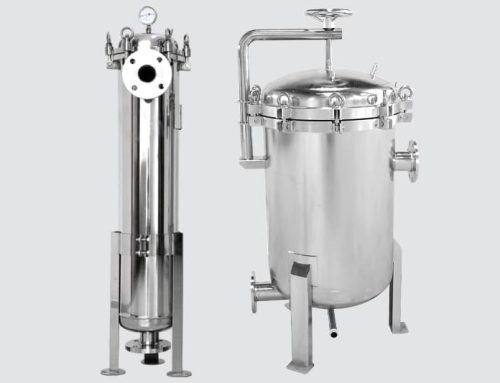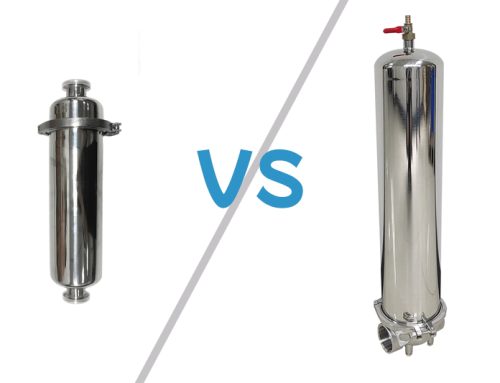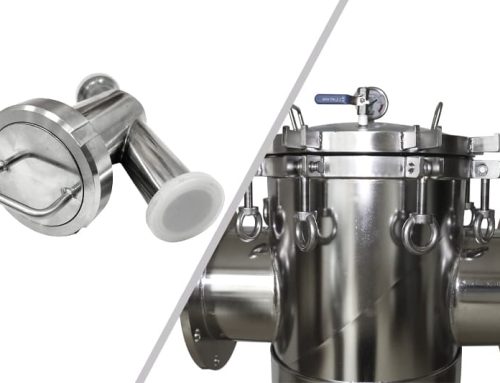

Корпус фильтра guarantee the safety and environmental protection of the production process through physical interception, adsorption and separation. This article systematically analyzes the technical principles and classification system of filters, comparatively analyzes the performance parameters of mainstream products such as cartridges, baskets, bags, etc., and combines the application cases in petrochemical, pharmaceutical, food processing and other fields to reveal their core values in water treatment, energy development and precision manufacturing. The article cites the American Water Works Association (AWWA) and the European Chemical Industry Federation (CEFIC) and other authoritative data in the industry, through the flow-accuracy comparison table, cost-benefit analysis model, to provide a scientific basis for the selection of industrial filters, and to look forward to intelligent self-cleaning, nanomaterials and other cutting-edge technological development direction.
I. Technical Definition and Basic Classification of Filter
1.1 Functional essence and core value of filters
Industrial filters realize solid-liquid/gas separation through porous media, and their technical value is reflected in three dimensions:
- Safety Barrier: 0.5μm precision cartridge filters in refineries intercept catalyst particles and avoid pipeline corrosion (American Petroleum Institute API 598 standard);
- Energy efficiency optimization: 27% increase in cooling water circulation efficiency in power plants with self-cleaning filters (International Energy Agency IEA report);
- Environmental compliance: the EU Industrial Emissions Directive requires that the concentration of suspended solids in food processing wastewater be ≤10mg/L, and the bag filter compliance rate is over 99%.
1.2 Four-dimensional criteria of classification system
The technological iteration of filters always centers around four major parameters:
| Classification Dimensions | Technical Indicators | Typical Products |
|---|---|---|
| Точность фильтрации | 1μm-100μm | Cartridge filters (RO prefiltration) |
| Working Pressure | 0.6MPa-6.4MPa | Casting Basket Filter |
| Stainless Steel Bag Filter | Temperature Resistance | -20℃ to 180℃ |
| Flow Capacity | 10m³/h-2000m³/h | Self-cleaning Filters |
II. Technical Characteristics and Selection Logic of Mainstream Filter Products
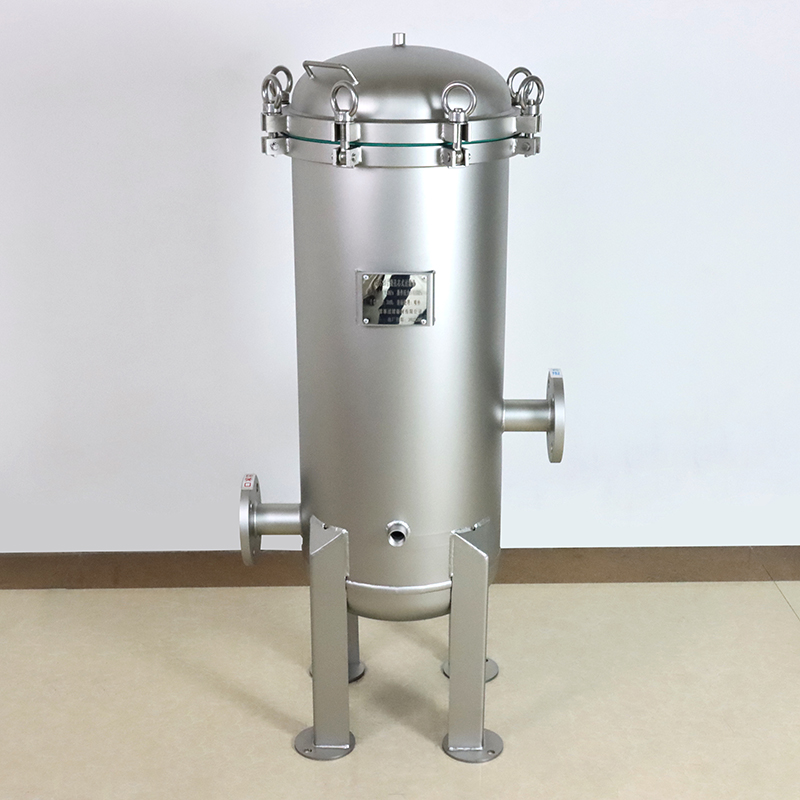
2.1 Cartridge filter housing:
- Structural innovation: multi-layer gradient cartridge design enables pharmaceutical companies to increase the microbial retention rate to 99.99% (in line with FDA cGMP standards);
- Cost comparison: 316L stainless steel material is 40% higher than the initial cost of PVC, but the service life is 3 times longer.
2.2 Bag Filter
- Economy of consumables: The unit price of polypropylene filter bag is only 1/5 of that of metal cartridge, which is suitable for high-frequency replacement scenarios in the dyestuff industry;
- Case reference: After a coating company adopted a three-stage bag filter system, the product impurity complaint rate dropped by 83% (CEFIC application report).

2.3 Intelligent breakthrough of self-cleaning technology
- Technical principle: backwashing + ultrasonic vibration to realize zero downtime maintenance (patented technology of Fraunhofer Institute, Germany);
- Energy efficiency data: After using this technology on oil platforms, cleaning energy consumption has been reduced by 1.2 million kWh per year (IEA best practice case).
III. Empirical Analysis of Cross-Industry Application Scenarios
3.1 Water Treatment: From Municipal Water Supply to Desalination
- Municipal Case: Singapore’s New Life Water Plant uses a combination of UF+RO processes to produce 500,000 cubic meters of drinking water per day (refer to PUB’s technical white paper);
- Technological innovation: graphene-coated filter membranes reduce desalination energy consumption by 35% (Nature Nanotechnology 2023 research results).
3.2 Quality control systems in the food and beverage industry
- Safety standards: Dairy production lines need to achieve 0.45μm filtration accuracy to remove bacillus (ISO 22000 certification requirement);
- Cost optimization: honey processors use stainless steel basket filters, and the equipment depreciation cycle is extended to 8 years (USDA ERS data).
3.3 Reliability needs of the energy industry
- Extreme conditions: filters in shale gas extraction need to withstand high temperatures of 80°C and pressure fluctuations of 6 MPa (API 6A standard test);
- Economic benefits: A refinery upgraded its filters to save $2.4 million annually in catalyst depletion costs (Hydrocarbon Processing magazine case study).
IV. Technology and Market Outlook
4.1 Breakthrough Applications in Materials Science
- Nanofibers: Electrostatically spun filters with a diameter of 50nm enable PM2.5 capture efficiency of 99.97% (experimental data from Tsinghua University’s School of Environmental Studies);
- Intelligent materials: shape memory alloy filters can adapt to changes in flow rate and reduce differential pressure loss by more than 30% (results of the EU H2020 project).
4.2 IoT-driven predictive maintenance
- Sensor network: real-time monitoring of differential pressure and flow parameters, with an early warning accuracy of 92% (Siemens Industry 4.0 application case);
- Digital twin: virtual model simulates filter life cycle, maintenance plan development efficiency increased by 65% (GE Predix platform data).
V. Index of authoritative data and industry standards
- U.S. Environmental Protection Agency (EPA): Industrial Wastewater Filter Selection Guidelines (EPA Filter Standards);
- International Organization for Standardization (ISO): ISO 16890 Air Filter Testing Standards (ISO Certification);
- Global Water Intelligence: Membrane Technology Market Forecast Report 2025 (GWI Market Analysis).
Заключение
As the “microscopic line of defense” of the modern industrial system, industrial корпус фильтра have always resonated with industrial upgrading in terms of technological innovation. From the application of cartridge filters in pharmaceutical cleanrooms to the breakthrough of self-cleaning systems on offshore platforms, technological iterations continue to reshape the boundaries of the industry. In the future, with the deep integration of intelligent materials and digital twin technology, filters will evolve in the direction of self-adaptation and zero energy consumption, injecting new kinetic energy for the sustainable development of global industry. Enterprises need to comprehensively consider the flow-accuracy matrix (see Table 1), the whole life cycle cost (see Table 2) and the industry certification system in the selection process to build accurate and efficient filtration solutions.Comparison of Full Life Cycle Costs for Different Filter Materials (based on a 5-year operating period)
| Filter Type | Initial Cost ($M | Maintenance Cost/Year | Salvage Rate | Total Cost of Ownership (TCO) |
|---|---|---|---|---|
| 316L stainless steel | 12.8 | 1.2 | 10% | 14.6 |
| PVC | 7.5 | 3.8 | 35% | 19.1 |
| Ceramic Composite | 18.3 | 0.6 | 50% | 16.2 |